Browsing Tag

writing

blogging

‘Bird by bird’: learning @ twitter

August 2, 2010

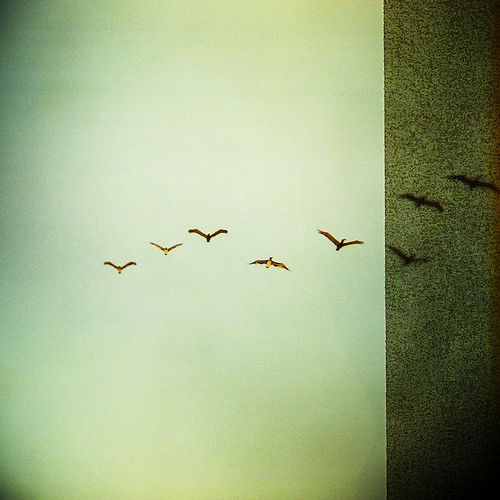
Many of you will know Anne Lamott’s insightful book, ‘Bird by bird: some instructions on writing and life’ . The phrase, ‘Bird by bird’ comes from a story about Anne’s brother, overwhelmed by a study on birds he has to complete. Anne’s father tells him, “Bird by bird, buddy. Just take it bird by bird.” Anne uses this metaphor to talk about writing and the need to keep moving ahead one steady step at a time, with short assignments or a focus on paragraphs, perhaps, but as long as you turn up at the table and actually sit down to write.

My sojourn into twitter has been a bit like that, learning how to build one step at a time. I’d been interested in the phenomenon of twitter but didn’t really understand it. I was finally pushed, through work, to set up a twitter account for a workshop where we explored new technologies and innovation. Once I’d set up an account, I began to explore. I started by following my key blogging reads and influences – Joanna Penn, Chris Guillebeau, Danielle LaPorte, the communicatrix, Sage Cohen. Joanna especially is a big twitter aficionado and talks on her podcasts about twitter as her main social media platform along with her blog. I learnt from the  podcasts. I watched and studied my key influences and how they used twitter to connect, be useful, get to know others, share information, gather feedback, advise about their own work and convey something about themselves. All in 140 character bite sizes of information.

Miraculously, people started following me. The birds began to flock and call. It still amazes me and I treat each follower interested me in as a gift and am honoured.  The tweets initially seem all over the place as they build. I try to read them all and work out how to respond. I feel overwhelmed and wonder how these people with hundreds and thousands of followers manage all the attention and communication. I search for some clues from other more experienced twitter players and find some useful advice to move forward.

Joanna Penn is incredibly helpful as always, as a role model and through her writing and podcasts. From The Creative Penn, I learn how twitter can connect with other social media, the value of being useful and finding my own ways to add value. Joanna’s  post on ‘Social Networking for Authors: Tips for using twitter effectively’  was really useful to get started. Reading it again now, there is still so much more I need to understand and apply – such as use of hashtags and using tweetdeck or similar tools more effectively. This article is an excellent starting point with lots of links to other twitter tips especially for writers. (Note to self: go back to this great post and learn some more now you are further along.)

Similarly in his excellent article, Free Advice, Chris Guillebeau emphasises that: ‘The best way to build a following is by doing stuff away from Twitter, and encouraging people who find you elsewhere to add you on Twitter…’  That makes sense and is where I find value on twitter and hopefully where I can add value over time. Chris also comments on the power of twitter, that 25% of his business comes from twitter even though in the previous 30 days he only mentioned his actual business on twitter once.

Naomi Dunford in ‘How to get 8379 new Twitter Followers by Christmas’, provides a blitz of a framework for gaining a twitter presence using a structured approach of tweets over a few days with a formula which is roughly: 1/4 retweeting, 1/4 responding, 1/4 sharing and 1/4 ‘stuff from your own head’ to show you are a human being. Then repeat…Best to read the article for the whole story – it is well set out in steps and phase one and two, plus humour throughout so it’s not so terribly serious. I haven’t gone the whole way with this, more due to my timeframes than anything, but love the structure and have used the ratio formula to try to balance my own tweets and also learn the ‘rules’.

There’s so much I still don’t understand but I have found twitter to be an incredible network of connection and unlimited possibilities. I am especially honoured by the kindness of people I have met through twitter and their genuine interest in me.  People I read and love are amazingly following my tweets. New people are connecting with my story and themes, and I am connecting with theirs. C Patrick Schulze, whose author’s blog I was reading, wrote this blog post for me on planning a novel. It’s about writing a story, not a novel, and has been incredibly useful for where I am now with my own story in moving on with writing. Where else could you get such connection? Every day I log on to twitter and find people connected to me in my thoughts and interests, and I learn more about them, reading their work and thoughts and what they are reading.

‘Bird by bird’ I will move ahead in this space. I wonder how the people with hundreds and tens and hundreds of thousands of followers manage these diverse and dense flocks, but I guess it builds by stealth and you manage it best as anything else likely to overwhelm you, as Anne Lamott suggests, one step at a time.

What has learning to twitter been like for you?

Image, Birds of Paradise by Jen_Mo from flickr and used under a Creative Commons license with thanks

Share

creativity writing

Gems #5 Facts, inspiration and story

July 26, 2010

Some recent writing gems on fact in fiction, inspiration and writing a story:

I loved the post, Making True Fiction, from Shanna Germain. It contemplates how true the facts need to be in fiction and how far you need to go with your research and accuracy in writing. It contemplates the conundrum of:  ‘In order to make stuff up, you have to convince your readers that it’s real. Both emotionally real and world-wise real.’

I am interested in this as the novel I am planning is in the historical fiction genre. I can see myself researching forever in the name of factual accuracy when the emotional authenticity of the story is the real issue. But how to get the balance? Starting out with the image of drowning vs the reality, Shanna explores what’s true, what’s fact, what’s accuracy and how much we need of these for an authentic reading experience. It’s an excellent thought piece I continue to think about on many levels. Some great readers’ comments also.

The guest post by Benison O’Reilly,’ Writers, Inspiration and the Ideas We Collect,’ on Suzannah Freeman’s ‘Write it Sideways’  was always going to grab me, based as it is on my favourite bird: the beautiful, sleek, dark blue, satin bower bird. The bowers of these fabulous birds are the result of the most amazing courting ritual of gathering blue items to attract a mate. If you ever see a nest, it’s littered with blue bottle tops, blue pegs and other (blue) detritus. All these riches to attract a mate  – check out the great pic in the article.

The point of the article is that writers need to be like bower birds, gathering, noting, recording, attuned to detail so we can use it for writing:

Undiscovered gems are scattered everywhere if you care to look. Keep your eyes and ears open and be disciplined, record everything.’

Read it – it’s brilliant just like the blue of the satin bower bird!

And finally, a custom made article just for me. From reading the author’s blog of C Patrick Schulze and a follow-up twitter conversation, he asked if there was anything specific I needed help with in my writing. I mentioned planning my novel as that is what I need to do next. I have done the research, have the idea but need to plan and get started. The result was a fantastic post with my needs in mind, ‘Don’t write a novel, write a story’. I expected structure, plot, planning details but this overall approach to how to manage the framework of the story was perfect for me just now. My main character’s journey doesn’t seem so heroic on the surface, but this is what I feel – a hero underneath to be resurrected, a victim of circumstances and difficult times that lost her way. I am honoured by the article and its helpfulness. Special thanks to C Patrick Schulze!

Image, Gems by Orbital Joe from flickr and used under a Creative Commons license.

Share

creativity music & images poetry transcending writing

The touch and reach of poetry

July 18, 2010

I write poetry – true confession. A rarefied art if ever there was one and you wonder why you do it, what calls you, why it defines you, this thing you are so passionate about but hardly ever talk about.

Colleen Wainwright (aka the communicatrix) in a recent post, ‘My narrow, narrow bands of interest and utility,’ discusses the search for a defining way to talk about such life passions and goals and the overwhelming drive to write that is for her a connecting thread:

To my creative intimates—the fellow strugglers in writing workshop, or elsewhere behind the scenes—I share the only thing I know for sure: that I want to write, and that I am doggedly pursuing it, placing structures where they need to be to support it, addressing what obstacles I can see that might be getting in the way of it.’

I relate very much to these words. Poetry and other writing, the urge to create, the sense of this being an underlying connective piece, the pursuing of ways to further its creation and finding the lifestyle that allows and fosters a writing life are all key themes for me. It  is not easy, especially when you have written for a long time and it has not gone very far it seems. Poetry especially can feel like a driven art with not many places to go. It’s easy for it all to go underground for a while in between other things like work and family, but it springs back up eventually. You cannot keep it down forever it seems.

This initiation into poetry started for me in an English class in my second last year of high school at the age of 16. A wonderfully inspired English teacher, Miss Furlong, chose the words of songs by Joni Mitchell, Bruce Springsteen and Harry Chapin to teach us about poetry. We listened to and studied the words of ‘People’s Parties’, ‘Twisted’ and ‘Trouble Child’ from the gorgeous album ‘Court and Spark’ and  ‘Jungleland’ and ‘Meeting Across the River’  from the explosive and gutsy ‘Born to Run’ album. We interpreted these words and we wrote our own poems.

I loved these musicians already, I was good at English, I had started scribbling words like poems already, and whether it was the combination of all this or just the right inspiration at the right time, the words came out – in response and in creation. I wrote a poem called ‘Touch the Earth’ based on an elegant book of the same name, subtitled ‘A Self-Portrait of Indian Existence’ with sepia images by Edward S Curtis and statements by North American Indians compiled by T C McLuhan. I wrote a poem of deep connection with these images and the people portrayed, forming and emerging onto paper in a surprisingly sensitive lyric piece capturing what I had been reading, seeing and feeling.

I got 30 out of 30 for my response to the poetry in song of Joni, Bruce and others and 25 out of 25 for my first full-blown poetic effort. I also received some feedback and a question: ‘I can’t fault this, Terri – your perception is startling – far beyond your years’  and ‘From where did you get your inspiration?’ I don’t know where it came from apart from the book and the connection with the words of songs I loved. I don’t know how I was able to articulate responses about relationships or other people’s experiences I had not directly experienced in any way at all.  But I found, from this writing experience, a way of accessing an inner knowing. I found a way of using the strength and music of language to interpret and understand the world as I was experiencing it. It opened my eyes to another level of feeling and thought, a latent talent, a lens of creativity I could see the world through. It was there already but the connection needed to be made and I was touched by poetry.

Sometimes you wonder where it will all go as you write, as you journey through crafting better and stronger poems and as you try to find a place for poetry internally and in the external world, such as through publication. I am heartened by Ted Kooser’s closing words in ‘The Poetry Home Repair Manual’ (p157):

‘I wish you luck with your writing, friend, and I hope that you’ll write a few poems that someone will want to show to the world by publishing them. Remember that the greatest pleasures of writing are to be found in the process itself. Enjoy paying attention to the world, relish the quiet hours at your desk, delight in the headiness of writing well and the pleasure of having done something as well as you can.’

I love these words. There is much valuable advice about crafting and publishing poetry in this wise and gentle book but I am calmed by the reminder to enjoy the touch of poetry and the moments that it brings regardless of where it eventually goes. The words of Sylvia Plath also echo the pleasure to be found in poetry and remind of the miracles of poetry reaching the people that it does touch:

Surely the greatest use of poetry is its pleasure – not its influence as religious or political propaganda.  Certain poems and lines of poetry seem as solid and miraculous to me as church altars or the coronation of queens must seem to people who revere quite different images. I am not worried that poems reach relatively few people. As it is, they go surprisingly far – among strangers, around the world, even.  Farther than the words of a classroom teacher or the prescriptions of a doctor; if they are very lucky, farther than a lifetime.”

Quoted in Charles Newman (Editor) The Art of Sylvia Plath, 1971, Indiana Uni Press p 320 – from  ‘Context’, London Magazine, no 1 February, 1962, p45-46

What are your reflections on the touch and reach of poetry?

 Image, Dreams by jecate from flickr and used under a Creative Commons license. See Dreams link for poem accompanying the photo.

Share

blogging writing

Gems #4 Putting yourself out there

July 9, 2010

 Some gems shining a little light this week.

I loved Justine Lee Musk’s recent post on Tribal Writer on ‘5 ways to put more ‘soul’ into your writing’ . Justine reflects on what makes writing invoke an emotional engagement, how to make writing original and distinctive and issues of vulnerability in writing. I found this post to be an insightful and deeply reflective piece, enacting the ‘soul’ in writing it was talking about. There are also practical tips and exercises for how to put more soul into writing. These tips are around the adage of  ‘show rather than tell’ but Justine fleshes this concept out with fresh perspectives you can apply to your writing.

Pushing Social post  ‘Lady Gaga’s 8 point guide to larger than life blogging,’ has attracted a lot of interest in recent weeks. Stanford Smith cleverly unpacks the genius of Lady Gaga’s  business and social media presence and how this might apply to blogging and your own ‘digital show’. The message is about being distinctive and unique, and the outcomes from a combination of hard work, clear vision and an incremental approach.  Lady Gaga has just reached 10,000,000 fans on Facebook, the first person to do so, so she certainly has some tricks up her sleeves for building an online presence that we can learn from.

I enjoyed the recent Creative Penn podcast interview with Dan Poynter on self-publishing and book marketing tips. Dan is a long-time player in self-publishing having started in 1969. From his long and varied experience, the interview provides valuable tips on self-publishing options, digital publishing, business models, marketing options and multiple streams of income from writing and related activities. As always, Joanna Penn’s podcast interviews open your mind to a wealth of possibilities for where your writing can go and how you can carve a writing life based on these options.

 Image, Gypsy Gem by Robyn Gallant  from flickr and used under a Creative Commons license.

Share

family history love, loss & longing transcending writing

The healing power of family history

July 5, 2010


My family has had a traumatic time over the past years. My younger brother died very tragically in November 2007. It was the saddest day and life was never the same. My father then died suddenly in May, 2009 so another wave of loss ensued and my happy, stable family of four was halved. Like all people dealing with grief, I struggled to get through the days, the weeks, the months after each episode and still feel the deepest sense of loss. I connect to them, especially my brother, through music as I drive to work first through the bush and then through the traffic. Music is such a powerful source of memory and connection.

Another way I found myself managing these terrible waves of grief was through family history.  I had already begun my search before these events, tracking back like a detective through the generations following the links. With the separation and the trauma from the deaths of those so close to me, family history and  ‘looking back to look forward’  has become a link to my brother and my father. My extended family, also their family, the closest link.  I could find the line anchoring us. I could lose myself in the research and discovery about where we came from. And from that, the story of our history could emerge and connect us. New narratives could form; old buried stories could be brought alive. Christina Baldwin in Storycatcher (details below) talks about tending the fire, the responsibility of being a storycatcher and the power of story to connect, ‘heal, remind and guide us.’

It’s not the only answer but:

  • if moving through is having something to cling to that helps you think about the future, ironically by planting you firmly in the past….
  • if moving through is knowing more about where you came from and the shared history you take forward…
  • if moving through is finding stories that connect you, knowing more about the stories of your ancestors and finding those that resonate…
  • if healing is about losing yourself in something so you are not completely overwhelmed by thoughts of grief and moment to moment anguish…
  • if story helps anchor your creativity and move you forward into something new, to integration and resolution even if it’s all not perfect or ever the same as it was…

then family history offers a healing place, a space to learn and engage with your origins, as far as you can, to take you forward to help you face a new future.

I am not a therapist or an affiliate of any family history sites or the resources below. I speak from the experience of working through family history as part of a  personal healing journey over the past few years. For me, it has led to an immense inner resource of narrative that I wish to tell in other ways such as through the writing of novels based on the stories of my ancestors. I am researching and planning this work at present.

For some people, family history research may not be possible or easy for various reasons, but I encourage people to consider the value of story to help connect in whatever way possible. Our stories of being disconnected also need to be told. The story from my family history that is the most compelling is one of absolute disconnection and  it is demanding to be told.

Some resources I have found useful on this journey are:

Ancestry: Amazing site with so many electronic data bases of records and existing family histories. You need to join up for the full benefits but there is much to gain from this.

Storycatcher: making sense of our lives through the power and practice of story, Christina Baldwin: an excellent book on story and the value of narrative to help frame new worlds.

The pictures on this page are some of the relatives I have found out more about through my searches. The woman above is one of my great, great, great grandmothers, Susannah Morris ( nee Richardson). The man below is her husband, William Morris. Both were early Australian settlers. How these photos have survived from such an early time, I do not know. My thanks to extended family member, Allan Morris, for passing them onto  family member and fellow researcher, Alex McDonald and I. This is the other thing that happens – you find new family connections and forge new links that you never knew you had.

Do you have any stories to tell about the healing power of family history?


Share


blogging creativity writing

Gems #3

June 27, 2010

Some gems shining a little light this week:

I absolutely loved Chris Guillebeau’s recent post, ‘Free Advice’. Talk about challenging things you generally accept without thinking and turning them on their head! This post does this in a fabulously thought-provoking way. I have been reflecting on the thoughts therein for the past week and have certainly found myself challenging some common concepts that are often blindly accepted. Like ‘the customer is always right…’ Are they? Equally fascinating was the stream of comments that emerged from readers with waves of fresh thinking. Like ‘you can’t have your cake and eat it too.’ As one wise reader, Patrenia, comments, ‘Why have the cake if I can’t eat it?’ Indeed. Some great fresh perspectives on all manner of things – customer service, checking emails in the morning, twitter, projects and team – in this post and its flow on comments.

I thoroughly enjoyed Joanna Penn’s podcast interview with Scott Sigler on ‘How to be a NY Times Best-selling Author’. It was another ‘blow your mind’ moment in terms of shifting my thinking about publication, especially self-publishing and podcasting as ways to get written work out there. The world of publishing has changed radically in recent times with technology and it is fascinating to hear the stories of writers such as Scott and their success across different platforms. Joanna Penn’s podcasts at The Creative Penn are full of such dynamic and inspiring stories of innovation in all genres of publishing and social media. Scott Sigler’s newest novel, Ancestor, has its own book trailer developed by him which is amazing and perfectly geared for other visually based media such as YouTube.

Loved this post from literary agent, Rachelle Gardner, on ‘Resources for Writing Memoir’ (via Twitter, Joanna Penn). Not only does it have great  tips and resources for writing memoir, it also has an excellent list of memoirs to read, some of which were familiar and loved and others that were new and endorsed by many – so a great list to delve into. I also love Tristine Rainer’s, ‘Your Life as Story’ about writing memoir and highly recommend it if this is an interest.

Image by Opals-on-Black.com,  from flickr and used under a Creative Commons license.

Share

PRIVACY POLICY

Privacy Policy

COOKIE POLICY

Cookie Policy