Browsing Tag

writing

creativity transcending writing

The Writer as hero

October 3, 2010

I’ve been reading Chris Guillebeau’s great post, ‘The Agenda Part II: The Individual as Hero’ about how it’s okay to pursue your big dreams, invest in yourself and understandable that you have difficulty explaining the reasons for your quests to others:


You don’t have to apologise for pursuing a big dream, because a distinguishing feature of such things is that not everyone relates to them.

Chris talks about the Olympics, marathon runners and other sports people among his heroes. I acknowledge these journey and achievements, but like Chris says, they are not the heroes I relate to. My heroes are writers – their stories are the ones I read, treasure and follow.

For me, there is something incredibly heroic about the writer’s life and journey. This is because it is my goal: to write and publish work of value that speaks to others: poetry, novels, creative non-fiction. This blog is part of that goal – getting me writing and connecting with writers – but the real goal is larger and more compelling, hard to explain, talk about and justify, but I know it’s what makes sense and connects the dots for me. I know it’s elusive and also very hard work, but it’s when I am writing that I feel truly alive and myself. So today, following Chris’s lead, I celebrate the writing heroes who inspire me.

My writer heroes fall into two categories:

  1. Published, famous writers whose books I read and biographies I study assiduously
  2. My blogging heroes who are all out there creating now and inspiring me

In this post, I’ll concentrate on the first category; next post, I’ll talk about my blogging heroes also writing books right now and documenting their journey.

My published and famous writing heroes’ lives intrigue me for their romanticism, their lyricism and their commitment to craft and writing practice. They embody what I aspire to. They are mostly women; today’s list of my key writing heroes is all women. Their stories of how they strived to balance work, family, creativity and their craft are often difficult journeys. There are themes of obsessive love, drugs, alcohol, mental illness, suicide, struggling to make ends meet, trying to write while making a living, reclusiveness and withdrawal. There are also themes of: success, achievement, the pursuit of perfection, hard work, constant crafting, connection with people, being in the literary milieu of an age,  publishing and public readings attracting many.

For these heroes, it was mostly a battle for their creativity to be expressed in the works that endure. I am grateful for their determination, their quest and the lyricism of their work that speaks to me over the years. It is because these heroes understood the ‘big dream’ and lived it that they mean so much to me. I celebrate these six heroes:

Daphne Du Maurier

I love Daphne Du Maurier’s sheer prolific work, diversity, narrative and story-telling skills and her dedication to her craft. Her unique vision created historical fiction, psychological thrillers such as ‘Rebecca’ and ‘The Birds’ and wonderfully innovative works such as ‘The House on the Strand’ which blends historical and psychological fiction together in a narrative about experimenting with hallucinogenic drugs way before it was fashionable. I am absolutely in awe of Daphne’s writing skills and writing life. My journey to Fowey in Cornwall where she lived was a pilgrimage and to be there taking the ferry across to Fowey and walking the narrow streets was thrilling. There are some excellent pictorial memoirs of Daphne Du Maurier’s Cornwall and the country that inspired her.

Suggestions to read: Rebecca, The Birds and other stories, The House on the Strand, Pictorial memoirs: Daphne Du Maurier Country – Martyn Shallcross; Daphne Du Maurier’s Cornwall – by Daphne Du Maurier.

 Virginia Woolf

Virginia Woolf’s novels are wonderful but I especially am inspired by her non-fiction, essays and diaries. ‘A Room of One’s Own’ is sitting here in front of me on my rolltop and is never far away. ‘Three Guineas’ is a favourite thought piece on war and also women; Virginia’s writing on women and writing excite and support me as the pioneering work they are. These works explore the barriers that women face in attempting to produce literature and help to understand the challenges in the dream of being a writer especially as a woman.

Suggestions to read: A Room of One’s Own, Three Guineas, Virginia Woolf: Women and Writing (The Women’s Press collection)

Sylvia Plath

I love Sylvia Plath’s poems for their genius, craft and power. Her poetry has had the most impact on me of any poet and I am thankful for her body of work and what she achieved in such difficult circumstances. I especially love the books that shows Sylvia’s mind at work as she edits and crafts her poems, the precision of it, the artist at work.

Suggestions to read: Sylvia Plath: Collected Poems, Sylvia Plath: a Critical Study – Tim Kendall (Faber & Faber) – for some wonderful copies of original drafting processes on poems

Emily Dickinson

I love Emily’s reclusiveness, her unique voice, her secretive commitment to her craft, her pearls created. The sheer volume of work created without an immediate audience is staggering showing a complete commitment to her individual vision and style. The story of her life is fascinating and worth a read for the contexts in which she was creating the work we now know and value.

Suggestions to read: The Life of Emily Dickinson, Vols 1 & 2, Richard B Sewall (Faber & Faber).

Elizabeth Smart

‘By Grand Central Station I Sat Down and Wept’ is one of my favourite books for its sheer poetic power. A novella, ‘a cry of complete vulnerability’ as my copy says on the back. The story of Elizabeth Smart’s life is about balancing love, writing, creativity, children and a fight for self-expression. The narrative of her life is about ‘the experience of being a woman artist in the middle of the century.’ (Sullivan – below p xi) I wish she’d written more but I know it was difficult with how life played out and the choices she made, but I treasure ‘Grand Central Station’ as a classic novella in the style I would like to write in.

Suggestions to read: By Grand Central Station I Sat Down and Wept, By Heart: the life of Elizabeth Smart – Rosemary Sullivan (Flamingo)

Edna St Vincent Millay

I love Edna St Vincent Millay’s romantic lyricism, her sonnets and her commitment to form. She was amazingly well-known in her time – the most famous poet of the Jazz Age and the image of  ‘the new woman’. She was incredibly committed to her art and lived an extraordinary life for her times, taking many lovers of both sexes. Her poetry was widely celebrated with her poetry readings often sell-outs with around 1600 people attending in some cases and her collection of sonnets, ‘Fatal Interview’ selling 35,000 copies in the early weeks of release in the middle of the Depression. The beautiful  photo of Edna St Vincent Millay when young surrounded by blossoms graces my desk here and inspires me.

Suggestions to read: Savage Beauty: the life of Edna St Vincent Millay – Nancy Milford (Random House)

These are my heroes, my heroines. I didn’t seek out for them to be all women but they are. I love them for:

  • their commitment to their craft and art
  • the narrative of their writing lives
  • their passion and love for writing
  • the works they have created
  • the lines that make my heart sing
  • the ideas that support me

Especially I love them for being my heroes, the female role models of the ‘big dream’ of writing because they understood it and lived it. 

Image, Vintage Underwood Number 5 typewriter by emilydickinsonridesabmx from flickr and used under a Creative Commons license with thanks

Share

creativity transcending work life

Thinking about transcending

August 29, 2010


Back to base. Thinking about ‘transcending’, the word, what it means, what it means to me.

Checking out the Merriam Webster online  on ‘Transcending’ yields up:

‘transcend

transitive verb:

1 a: to rise above or go beyond the limits of  b: to triumph over the negative or restrictive aspects of: OVERCOME
2: to outstrip or outdo in some attribute, quality or power
intransitive verb: to rise above or extend notably beyond ordinary limits

Examples of transcend:

1 music that transcends cultural boundaries
2 She was able to transcend her own suffering and help others
3 Her concerns transcended local issues

Origin of transcend:

Middle English: from Latin, transcendere – to climb across; transcend, from trans, and scandere, to climb
First known use: 14th Century
 
Related to transcend:
Synonyms: beat, better, eclipse, exceed, excel, outclass, outdistance, outgun, outmatch, outshine, outstrip, overtop, top, tower (over), surpass’

The words that resonate with me: to rise above, go beyond the limits of, triumph over the negative or restrictive aspects of, extend beyond ordinary limits, to climb across, eclipse, exceed, surpass and outgun. They suggest a strength of spirit, resilience, creativity and ability to find a source of power to go that extra dimension.

This for me relates to managing grief, pain and difficulty; finding solutions in the workplace; taking a creative approach instead of an old one; finding a fresh perspective;  being able to find ways of managing and climbing across obstruction or restriction; ways such as:

  • writing: poetry especially, but any writing that helps you understand and cut through – letters, emails, journals, blog posts, essays, long cathartic dumps of free-writing, submissions that clarify and come up with a strategy and creative solution to a problem
  • reading the right book: whatever it is – fiction to escape, non-fiction to understand, learn how to or make sense of; either form to learn about life, yourself, writing and another’s world
  •  listening to the perfect music for the moment, again whatever it is and thank goodness for ipods and other portable music sources that enable us to find the right song for the moment and play it now.
  • images and photography: creating an image that captures where you are, seeing an image that another has captured that echoes the world for you just now, wishing you had a camera for that image you have to capture in your mind’s eye to carry with you as the cameo of your current state of being
  • family and family history: past, present and future, those you have loved and lost and cherish, those you can see and hold and hang onto and connect with, those you have never met that mean so much to you somehow through your lineage because they are part of you
  • friends: people you chime with that become part of you through some serendipity or synchronicity of meeting – in the workplace, online, through your family, through your various interests in the world.
  • blogging to find a way through and beyond, to communicate and share this vision, to appreciate the unique visions of others and how this might inform and shape your own.

Hence my themes, categories and tags here in this special space.

The words that don’t resonate with me are the ones mostly about out-doing somebody else. ‘Transcending’  for me is not a comparison or a competition; it’s a personal journey of finding the extraordinary, the extra-special, the extra-creative way of managing and living positively and the difference this can make.

It’s become an intuitive personal mantra, my theme and centre, honed from experience but always developing into the future. I welcome you to join in the journey of exploring more about transcending, how the ‘ climbing across’ might be negotiated and the difference it could make. I welcome your thoughts here. 

‘The brighter the light, the darker the shadow.
Some things can’t be changed; they’re part of the show.’
Stephen Cummings – ‘The Brighter the Light’
Good Bones (Liberation Blues Acoustic Series)
Share


creativity introversion

Gems #7 On Creativity and Solitude

August 21, 2010

Some gems on creativity and solitude…

Leo Babauta opens a great piece on creativity and solitude with this quote: “In order to be open to creativity, one must have the capacity for constructive use of solitude. One must overcome the fear of being alone.” ~Rollo May

Like Leo, I am endlessly fascinated with creativity. When I worked assiduously through the wondrous ‘Style Statement‘ book by Carrie McCarthy and Danielle LaPorte, I ended up with ‘Sacred Creative’ as the two key words for where my essence meets my expression. I love reading biographies of writers, looking at their workspaces and engaging with how they created their work.

Leo’s article, The No 1 Habit of Highly Creative People, comes up with solitude as the No 1 habit for creativity and reflects on the ways solitude fuels and supports creativity. He includes some thoughts around solitude as a source of strength from current creative people as well as some famous creative people from the past . His article, linked to this one, The Little But Useful Guide to Creativity, is a further reminder of ways of being grounded in a creative mindset. The ones that ring true for me: long walks on the beach, shutting out the outside world, getting things down and working in small steps.

I love May Sarton’s ‘Journal of a Solitude’  for capturing what it’s like sometimes when solitude and creativity come together and the raw, vulnerable feelings that come up when you do manage to get that space and time:

‘The ambience here is order and beauty. This is what frightens me when I am first alone again. I feel inadequate. I have made an open place, a place for meditation. What if I cannot find myself inside it?

I think of these pages as a way of doing that. For a long time now, every meeting with another human being has been a collision. I feel too much, sense too much, am exhausted by the reverberations after even the simplest conversation. But the deep collision is and has been with my unregenerate, tormenting and tormented self. I have written every poem, every novel for the same purpose – to find out what I think, to know where I stand. I am unable to become what I see. I feel like an inadequate machine, a machine that breaks down at crucial moments, grinds to a dreadful halt, “won’t go,” or, even worse, explodes in some innocent person’s face.” (p12)

And I love these words from the end of the No 1 Habits piece for helping to still that maelstrom of vulnerability:

‘Lastly, being creative means living a creative life.  Expect yourself to have one.  Believe you are creative. Know that you are. Make that the most important habit of all.’

A recent Creative Penn podcast interview ‘Authenticity And Creative Expression With Robert Rabbin’ provides some excellent tips for moving through these barriers and into the authentic and creative directions of your plans and dreams. The interview provides practical advice on how to conquer your fear of being authentic. Being playful and having fun are part of the solution. There is some really great advice to think about for moving on with creative adventures like a writing life.

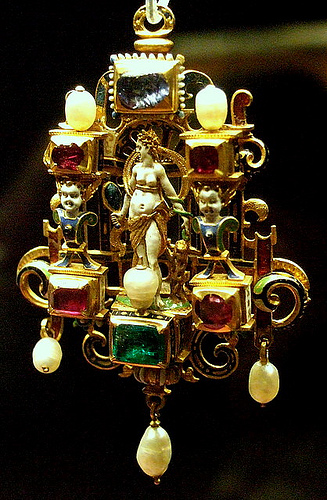
Image, Gold enamelled gem-set pendantby kotomigd from flickr and used under a Creative Commons license with thanks

Share


blogging transcending writing

I contain multitudes

August 14, 2010

I have been thinking more on the issue of brevity vs the longer post this week. I wrote recently in ‘Shorter posts, smaller steps’ about the value of working in smaller chunks for blogs, other writing and for managing many things in life.

Then very shortly after, via twitter, I read a recent post of Jonathan Morrow on Copyblogger, advocating for quality, not quantity, in ‘The  Three-Step Guide to Getting More Traffic by Writing Less‘  and recommending that one strong post a week will work better, drive more traffic and be less onerous than more regular posting: ‘There’s no set number, but here’s a suggestion: start with one really good post per week, and if you have time, work your way up.’

This seemed to totally contradict what I had just read from John Sherry in his guest post, Why bite size is the right size content’ at Virgin Blogger Notes and what I’d written about. But I believe what Jonathan Morrow wrote also and I can see the sense in one well crafted post a week. They both make sense – how to reconcile?

Like all things, it’s clearly not ‘a one size fits all’ story. After I wrote my post on the value of shorter posts, I reflected on a longer post I had read and loved recently: Your Own Revolution: Poetry, Publishing and the Internet. This was more like an essay, fully developed, and I thought that there has to be a place for the longer, reflective thought piece in all this. Sometimes I love to write like that and love to read work like that and have something very deep and solid to take away. But does a post have to be long to be deep and solid? Which is better?

To help me makes sense of all this, John Sherry who wrote the original post on ‘bite size chunks’ chimes in on the comments to Jonathan Morrow’s post saying:

‘Good, sensible advice Jonathan. Slow and sure to start, building it up as you go. It’s easy to compare with top blogs and bloggers with their active presence and high subscriber numbers but best to first get a firm foundation. Get blogging at a pace that’s comfortable and then reach out a bit and connect to the wider blogging community is a wise suggestion.’

This is a lead and taking a little further the analogy of driving from E L Doctorow’s image from ‘Bird by Bird’ discussed in ‘Shorter posts, smaller steps’: We need to have the driver’s skill-set for all occasions and conditions. Sometimes, we might choose to drive in short bursts with frequent stops; other times it might be a longer haul, perhaps getting to the destination quickly or other times, meandering and enjoying the view. Having all these tools in a blog writer’s repertoire means we can write as required and as we feel for the topic, the timeframes and our focus at the time. And for maximum reader impact.

Like I wrote about in Planning to be fluid,’ you need to have a strategy, a roadmap, to guide the changes in your driving and your itinerary, keeping in mind the conditions. But it’s also great to be adaptable, diverse and fluid. One of my favourite quotes is Walt Whitman’s lines from ‘A Song of Myself’:

‘ Do I contradict myself? Very well, then I contradict myself, I am large, I contain multitudes.’

SOME people out there are posting hardly any words at all. Led by Susannah Conway, an ever-growing team of bloggers are having a rest from words and posting only photos for the month of August. Called ‘The August Break’, bloggers all over the place are joining in – you can see some of the collective photos here on flickr.

I also love Danielle LaPorte’s posts that are only a few concentrated words. A recent one, soul equation, had me thinking all week about presence demonstrating the punchy power of a purely held thought.

For me though, I need to put a little less pressure on myself and take smaller steps just now. I need to establish a rhythm and a pattern and not get overwhelmed by volume or density. I need to settle my strategy, to calibrate and fit it with my life, and keep my content clear. The long and the short of it are all tools for the repertoire, just suggestions, and it is best not to be too prescriptive either way and to just modulate as you go. As John Sherry continues in his comment to the post of Jonathon Morrow:

‘Get to know your blog and what it’s about and let it develop organically. I have taken that route and it’s been real fun and now I’m getting right into it naturally. You want it to be enjoyable not a chore.’

Yes, I think that is exactly the point: enjoy yourself, your blog and what it’s creating in the process. And that is something I am enjoying immensely and is perhaps the true heart of the matter.

People who honestly mean to be true really contradict themselves much more rarely than those who try to be ‘consistent’.
Oliver Wendell Holmes

Image, Morocco, Marrkech, Pattern by Frank Douwes from flickr and used under a Creative Commons license with thanks

Share

blogging creativity transcending writing

Gems #6 Encouragement, kindness and resilience

August 9, 2010

Some recent gems shining a whole lot of light…

If you haven’t read The Manifesto of Encouragement on Danielle LaPorte’s White Hot Truth, rush over for the best injection of inspiration and encouragement you will have felt for a long time. Danielle’s initial post is pure light and genius. Then hundreds of people have added their words from their precious angle. It’s a string of pearls you can wear around your heart to protect you and make you shine. It also opens you up to what you might be missing around you or what you might aspire to. I hope one day it becomes a book I can carry with me every day.

Recently, I wrote a post about twitter and my positive experiences connecting up with like-minded people and the kindness and reciprocity I had found. I had just finished writing and posting, to then find Jean Sarauer’s post on Virgin Blogger Notes on a related theme: How to grow your blog with kindness. Jean provides a personal story and some excellent examples of how kindess and adding value in blogging and twitter can enhance the experience and outcome for all. Jean encourages us to ‘practice shifting your focus from what you want to get to what you can give’.  This post helps you appreciate how you can contribute and how ‘As the analytics of your heart show upticks in kindness, encouragement, and support, the analytics of your blog will also improve.’  The ‘Manifesto of Encouragement’ is a great example of this.

I only caught up this week with the July 11 ‘Creative Penn’ podcast interview by Joanna Penn: ‘Inspiration For Authors On Resilience, Accepting Criticism And Being An Introvert With Clare Edwards’.  It was excellent – one of the best of Joanna’s interviews I’ve listened to – probably because it chimed in around some personal keywords: resilience, introversion and writing. I loved the way Joanna opened up in this interview about her own experiences as an introvert with doing interviews and developing a speaking career. I related so much, being at the far end of the introversion spectrum and interacting with people all day, every day, in my work role, often standing up and speaking to many people. I have learnt to manage this but this interview provided more insightful tools for balancing between the inner and outer worlds. There is also a strong focus also in the interview on tips for resilience and staying present in the moment.

Three overwhelmingly positive gems to take us all forward with encouragement, kindness and resilience!

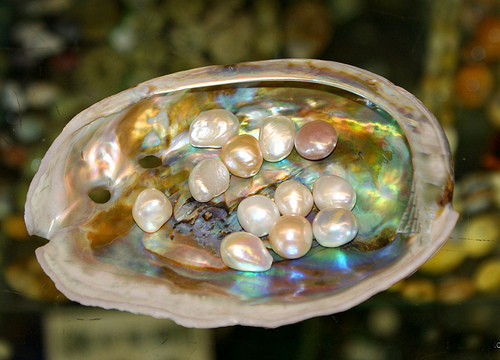
Image, Mother of Pearl by Westcoastrobin from flickr and used under a Creative Commons license with thanks

Share

blogging creativity writing

Shorter posts, smaller steps

August 7, 2010

My posts are too long I know. I don’t start out to write long pieces. I know what I want to say and it’s structured in my head but often ends up longer than I intend – more around 1000 words than a neat 300.

As John Sherry points in a guest post on Virgin Blogger Notes, ‘Why Bite Size is the right size content’, it’s a lot to ask of readers if we are posting 2-3 posts a week of 1,000 words. It’s also making the task bigger than it needs to be for the writer/blogger. As I have progressed here, the posts have got longer, the gap between them larger and the job of writing them has become more demanding and less likely to occur regularly.

The result is a spiky reader profile with highs and lows, naturally, as they have nothing to read between the big waves of words I carefully construct.

I’ve also been re-reading ‘Bird by Bird’ by Anne Lamott and she implores in many ways to take writing in steps. She emphasises the ‘short assignment’, chunking the work into paragraphs, the ‘one inch picture frame’, an immediate focus. She provides a wonderful quote from E.L. Doctorow: ‘writing a novel is like driving a car at night. You can see only as far as your headlights but you can make the whole trip that way.’

The big lessons of life – trauma, grief, hospitals, illness – teach us, force us, to take one hour, one day at a time, to be in the moment, to work step by step, to have a vision and know where you want to go, like the car with its headlights leading the way, but to focus on now so as not to be overwhelmed.

So, taking this good advice from John Sherry, from Anne Lamott, from my experiences in life, I am going to write shorter posts, keep this work moving, manageable and meaningful to others, and connect up the small steps into a journey I can measure. (Note word count = 336)

Image, Old stone steps through thick green vegetation by Horia Varlan from flickr and used under a Creative Commons license with thanks

Share

PRIVACY POLICY

Privacy Policy

COOKIE POLICY

Cookie Policy