Browsing Tag

writing

inspiration & influence reading notes

Reflections on reading Australian women writers

March 8, 2015


It’s International Women’s Day and I’m sitting here on a sunny Sydney Sunday listening to women’s music on the radio – flipping between Double J and Triple J – and thinking about reading Australian women writers.

It’s my fourth year of participating in the Australian Women Writers’ Challenge and I thought I’d take a few minutes on this IWD to reflect on my experience of reading Australian Women Writers via the challenge.

The challenge is about enjoying, supporting, sharing and promoting Australian women’s writing. If you want to know about the challenge, you can read more about it here: Background to the Challenge. And you can sign up for 2015 here: Sign up to the Challenge.

aww-badge-2015

Started by Elizabeth Lhuede in response to gender imbalance in books reviewed, in reading preferences and choices and in award representation, the challenge has created a groundswell of readers, reviewers, bloggers and tweeters making a conscious choice to read, review, communicate about and celebrate books written by Australian women.

Now in its fourth year, the challenge has resulted in thousands of Australian women writers’ books being read and reviewed and national and international recognition of its quiet achievements.

As the Australian Women Writers’ Challenge blog states:

The Australian Women Writers’ Challenge is part of a world-wide movement to raise awareness of excellent writing by women. It helps readers to challenge the subconscious stereotypes that govern our choice of books to read.

I’ve signed up again in 2015 because it’s now an integral part of my reading choices and I continue to be inspired and excited by Australian women’s writing. I’ve enjoyed diverse reads over 2012 to 2014. There are so many Australian women writers’ works I simply would not have noticed or enjoyed if not for the challenge.

The challenge has made me seek out new Australian women writers, revisit writers I’ve enjoyed and kept my antenna up about their successes, awards and commendations within the circle of women’s writing and beyond.

It’s kept my writing heart alive and is an inspiration as I read; a message that I am also able to write and create, express my stories and find space for my narratives in whatever form. As my heritage, it’s where I can find linkage, possibilities and a springboard for creating. I’ve written about that here and here adding my voice to the space.

In terms of participation, my reading lists are not enormous – around 6 to 7 books a year, but they are steady and growing. I’ve struggled to write the reviews as I would like, but I’ve engaged with the reading and with the AWW community via social media. I’ve contributed that way and made some great online connections with Australian women writers and their readers that have enriched my reading life and beyond.

You can participate to whatever level you can manage and the pleasures and learning are immense for that investment, raising awareness of reading choices and celebrating narratives and works by Australian women and inspiring women to find their voices through reading the voices of others.

It’s no light-weight endeavour. These are to me the voices of creative possibilities and I treasure them.

Here’s my reading list so far:

2012:
Searching for the Secret River: A Writing Memoir – Kate Grenville
Sarah Thornhill – Kate Grenville
When We Have Wings – Claire Corbett
The Light Between Oceans – M L Stedman
Poet’s Cottage – Josephine Pennicott
The Engagement – Chloe Hooper
Disquiet – Julia Leigh

2013:
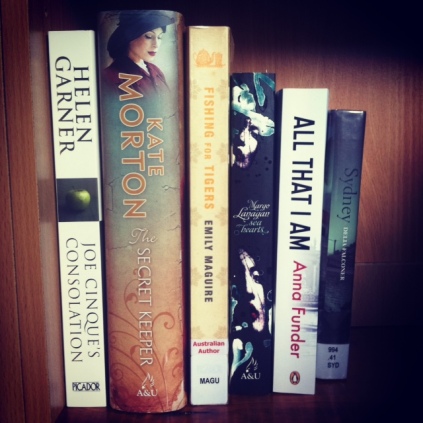
Fishing for Tigers – Emily Maguire
Sea Hearts – Margo Lanagan
Sydney – Delia Falconer
The Secret Keeper – Kate Morton
The Scrivener’s Tale – Fiona McIntosh
The Longing – Candice Bruce

2014:
Questions of Travel – Michelle de Kretser
Burial Rites – Hannah Kent
Mateship with Birds – Carrie Tiffany
Currawong Manor – Josephine Pennicott
The Fictional Woman – Tara Moss
Claustrophobia – Tracy Ryan
All the Birds, Singing – Evie Wyld

Many of these books were picked up because I was looking for Australian women writers’ books in libraries, shops and online. I possibly would not have read ‘Light Between Oceans’, ‘Poet’s Cottage’, ‘The Longing’ or ‘Claustrophobia’ if not for the challenge and these have become some of my favourite reading experiences of the challenge so far.

I have deliberately read across genres and so if not for the challenge, may not have enjoyed the beautifully science fiction inspired, ‘When We Have Wings’, the Celtic fantasy world of ‘Sea Hearts’ or the weaving medieval narrative of ‘The Scrivener’s Tale’.

I’ve been more aware and more excited when Australian women writers have been nominated, short-listed and won awards for their books and I’ve sought out the books to see why they were celebrated in their achievements, especially ‘Questions of Travel’, ‘Burial Rites’, ‘Mateship with Birds’ and ‘All the Birds, Singing’.

In 2015, I’ve already read the exquisitely tender ‘The Golden Age’ by Joan London and have Annabel Crabb’s ‘The Wife Drought’ lined up to read. I’m keen to read Clare Wright’s ‘The Forgotten Rebels of Eureka’ and also read some writers I haven’t read like  Sonya Hartnett, Geraldine Brooks and Liane Moriarty.

It’s been a rich journey and I encourage you on this International Women’s Day to seek out the voices of women writers that excite and sustain you wherever they may be.

AWW2015

blogging

I blog

October 11, 2014

beach painting

“I blog. Writing about what I’ve been learning about, and my successes as well as my failures, has been an amazing tool for learning. I highly recommend it, even if you never want to be a writer or make a living as a blogger. Don’t worry about growing your audience, but just blog and share it with friends. Why? Because to write a blog post, you have to reflect on your life. You have to push yourself a little and experiment. You are motivated to learn something useful, so you can share it. You dig deeper and find new things you didn’t realize before. You hold yourself accountable for changes, because other people are watching.”

from Leo Babauta, ‘My Most Effective Learning Tools’, Zen Habits

I so wholeheartedly agree. As a blogger of some four or more years now, sometimes you do wonder why you bother. With the big gaps in my blogging patterns, because of managing a full-time job and a long commute, it’s so easy to give up, think of giving up, put my feet up and not blog but I love my blog and what I have created here over time and the act that is blogging.

It’s the ongoing creative heart of my days. Sometimes when it’s hard going at work, I find a few minutes to look at my blog, this almost other self it seems when I am in the work realm. I breathe more easily seeing my creative other self there in words and images on the screen, the pink blossoms shining out.

As Leo Babauta sums up, it’s about learning, about creativity, about reflecting and pushing and making deeper connections. It’s finding the right photograph for the words that you are pulling together. It drives you to take those photographs in the first place and see the world differently.

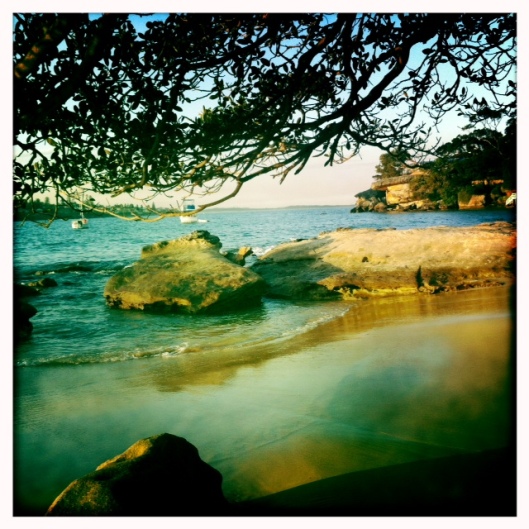
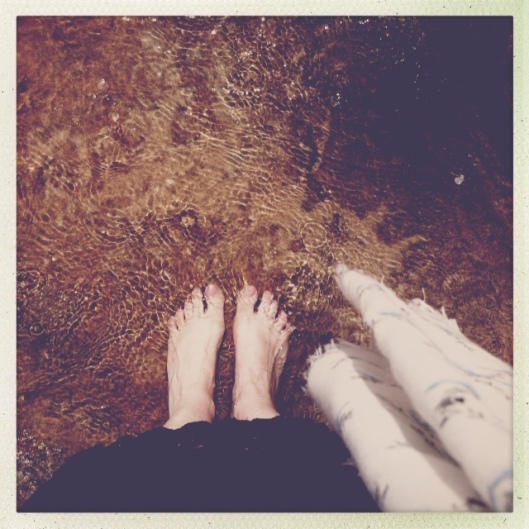
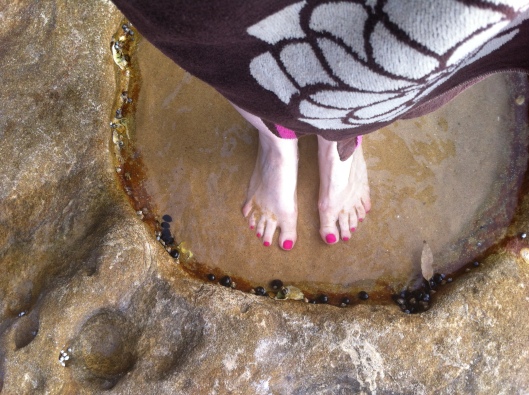
I had a rare mid-week day off from work recently and took a long walk around my local streets and beaches. I took 150 photographs on that walk of what I saw and experienced. I’m thinking how to pull them into a photo-essay here. The act of thinking about that is making me reflect on my love of where I live, the value of time to recharge, what standing in the water looking out means to me, the therapy of walking and the recharging power of sunshine and solitude.

Leo is so right when he says: “…to write a blog post you have to reflect on your life.”

Whether it’s what it’s like being an introvert, the importance of family history, the struggle to write and publish poetry, the value of what you choose to read and what it means to you, the symbols that keep recurring in your life that you are noticing, learning what sustains you, the travel to new places and what you feel there, thinking about how you can be more productive, the images that inspire you or the act of blogging itself, the act of catching those random thoughts and crafting them into a piece of writing, a blog post that becomes public is a creative, reflective and life-affirming act.

One of my earliest posts, ‘The value of howling into the wind‘, still holds so true in my experience. It’s so easy to fall into focusing on the size of your audience (or the lack of) and feeling like it’s just not reaching very far and has no point. But to blog, to write creatively and publicly is an act that has great personal value of heightening experience, digging, discovering, connecting, tuning in and shaping something that might not otherwise find itself.

Blogging might, and still does for me, feel like howling into the wind but it has its own intrinsic value of strength and uniqueness that just might be of value to others as well:

So ‘howling into the wind’ is about running with the wolves and the ‘longing for the wild’ as Estes calls it. It’s about stoking the creative fire with winds that might feel a bit uncomfortable and cold at first. It’s about the strength that might come from tuning into such intuitive sources, making connections and finding that to which we belong. And through whatever means – writing, photography, a business idea, a new perspective, the shape of a poem – forming something unique that is your voice that others may also tune into, relate to and take something away from. So let’s keep howling.

beach walking

blogging reading notes

Beaches and books

June 11, 2014

at the beachIt’s been such a busy time these past months…this the continuing mantra of my life. And the posts here are so infrequent when I had planned so much more this year.

In between the busyness, beaches and books have sustained me, my Instagram feed has mostly reflected the books I am reading and sights from walks on the beach. (Until recently heading to Japan and that’s another story to come!)

On the beach, walking, the sun setting, the cool sand and the water rushing or lapping depending on the day.

And the books, mostly Australian Women Writers lately though not exclusively – I’ve read Michelle de Kretser’s ‘Questions of Travel‘, Carrie Tiffany’s ‘Mateship with Birds‘ and Hannah Kent’s ‘Burial Rites‘ as well as Elisabeth Gifford’s ‘Secrets of the Sea House‘ plus enjoyed a reread of a gentle favourite, Rumer Godden’s ‘In this House of Brede‘. I’ve eagerly entered these worlds and stayed there for my 30-40 minute train journey on most days.

Both beaches and books have sustained me.

The beach grounding me as it always does, my feet in the sand, the act of walking, the water cooling my thoughts, my breathing calming.

The books keeping me connected to my love of words, my creative heart that is somewhat languishing. The part of me that wants to write more poetry and the novel that I imagine but cannot quite get to that other creative desk of the heart at present.

Words that have come to me lately:

The spirit of her invincible heart guided her through the shadows.

from Gabriel Garcia Marquez’s ‘One Hundred Years of Solitude’, and:

for whatever we lose (like a you or a me)
it’s always ourselves we find in the sea

from e e cummings loveliest poem, ‘maggie and milly and molly and may’.

And my own beach walking poem on this theme:

 Narrative

She starts up high, facing north
towards slow mist,
watching the sea wash
into the rain’s drift below.

She is called to the beach
as if to a baptism, bride-like,
white as the air, stepping
down the rough rock stairs.

She narrates her life,
writes as she walks,
as if the sand and shells are
the bones of her story.

And the pieces connect her:
an imperfect white oval shell,
a fig leaf from a canopy,
the sketched black lines
of a creature’s moving home.

Cool and tight limbed,
she ends in another place,
as if washed by waves,
her contours, clear and shell-lined
as the Borromean grottoes
of Isolabella,
her white shining lights
coming home.

reading notes writing

Celebrating Australian Women’s Writing

February 24, 2013

awwbadge_2013

The ‘Australian Women Writers Challenge’ is one of my projects for 2013. I undertook this challenge in 2012 and had a wonderful reading and connecting experience and looking forward to extending and enriching that this year.

So what is the challenge? You can read more about it here but basically it’s a reading and reviewing challenge to lift the profile of Australian women’s writing. It was started in 2012 by Elizabeth Lhuede in response to an under-representation of women’s writing in Australian literary prizes being awarded. It has since developed into a strong, diverse group of readers and reviewers celebrating and sharing writing by Australian women.

You can choose your level of engagement in the challenge and there’s no pressure to complete as such, just a target to aim for. Last year, I aimed high (read 10, review 6) and in a busy year managed most of the reading and none of the reviews. This year, I am aiming a little lower (read 6, review at least 4) and hope to over-achieve!

So why am I signing up again and why is it important?

I have a great love of Australian women’s writing. My Australian literature bookshelf is about 80% women writers. This love developed naturally during my university literature studies and has endured. It’s my history, lineage and backyard; they are not the only writers I enjoy but they are the writers closest to my experience with all the local references, influences and language especially as it relates to the experience of women.

I am engaging with the challenge in 2013 again to broaden this experience further; in 2012, I learned about so many new Australian women writers and so many diverse reads. I have been enjoying deliberately seeking out writers that are new to me and genres that I don’t normally read.

It’s important because the profile of Australian women writers has been under-represented in terms of awards and book reviews, as surprising as this is. Read this post on the background to the challenge to get a feel for some of the issues. The AWW Challenge has done much to celebrate and raise awareness about Australian women’s writing and I for one am very grateful for the community and experience, as well as the profile being generated. The challenge has resulted in a powerful ground shift that has attracted national and international attention.

Reflecting on 2012

In 2012, I read 7 books towards my target of 10. Because I didn’t get to the review in 2012 and in case anyone is looking for potential reads for this year, I’ll list my reads and add a few brief comments.

Searching for the Secret River: A Writing Memoir – Kate Grenville‘s account of the research and writing experience of ‘The Secret River’ was always going to be an engaging book for me, being about a number of key interests: writing, family history, genealogical research, fact and fiction and the intersection between them. One branch of my family also settled in the area Kate was researching and writing about so it was all close to home personally and a fascinating read on how fact and family story came to be a work of fiction.

Sarah Thornhill – Kate Grenville followed on from ‘The Secret River’ so a natural next read and it didn’t disappoint as a close study of what is what like for strong willed women in colonial times with all its many challenges, especially in terms of culture and gender.

When We Have Wings – Claire Corbett was thrilling and a read that took me right out of the present to another world where people can grow wings and society is separated into those who can fly and those who can’t. Technically brilliant, especially in its descriptions of the experience of flying, and a well constructed story in a whole new space and time, I enjoyed ‘When We Have Wings’ thoroughly. This review by fellow AWW Challenge participant, Mark Webb provides more detail. Well worth reading – a fantastic debut novel from Blue Mountains based writer, Claire Corbett.

The Light Between Oceans – M L Stedman was one of the books I picked up and bought from reading the back blurb when looking for a new Australian Women Writers read in 2012. It soon emerged that this book was gaining interest all over the world and with good reason. Set against a wild West Australian coastline, featuring a remote lighthouse and with a twist and turn plot and gut-wrenching life decisions, it was a highlight for me in 2012.

Poet’s Cottage – Josephine Pennicott was another book purchased without any prior knowledge as part of AWW2012. Set in Tasmania, with a family history to uncover, a murder mystery, some wonderfully eccentric characters and an inherited cottage with secrets, it’s another atmospheric read.

The Engagement – Chloe Hooper – spooked me completely one night. It’s a suspenseful, intense and mysterious ride, with the engagement as much with the reader as between the two main characters who form a dubious connection that takes on a life of its own on a remote western Victorian property. Read for its sheer intensity.

Disquiet – Julia Leigh is a tight and very disturbing novella about an Australian family returning to family and chateau in France, escaping turmoil but arriving to just as much dislocation. Everything is like a film still, the language sharp and fresh; it’s aptly titled.

What have I learnt from 2012?

  • AWW is a great journey; read outside your usual genres, discover some of the Australian Women Writers – recent or past – that you haven’t encountered up till now
  • You don’t have to review in the order that you read and you don’t have to review everything.
  • Don’t over-complicate the reviewing; I started by researching the background of novels for my reviews and I made it all too complicated for myself. Revisiting all the furore that surrounded fact and fiction in ‘The Secret River’ got me all confused. In the end, I had to remind myself, it’s not an academic treatise for university.
  • The AWW reading and writing community is fantastic. You can connect on the blog, through twitter @AusWomenWriters or hashtag #AWW2013, through Goodreads; there are readers, writers and reviewers from all walks of life reading so diversely and widely, it’s a treat. Even though I didn’t review, I tweeted and blogged and contributed in that way – it was fun, I made some valued connections with like-minded readers, I found a whole host of book bloggers I didn’t know about and I learned a heap.
  • The consolidated reviews are excellent and highlight the work of AWW readers and writers across all genres. Check out the review listings here – with reviews all neatly sorted by genre, there’s plenty of inspiration and information.

What am I planning to read (and review) in 2013?

I’m currently reading ‘The Scrivener’s Tale‘ by Fiona McIntosh, classified by AWW as ‘speculative fiction’, a genre I haven’t engaged with extensively. Other books on the list are:

  • Sea Hearts, by Margo Lanagan – there have been some fabulous reviews on this book, especially Elizabeth Lhuede’s review and want to experience this book for myself
  • Fishing for Tigers by Emily Maguire – loved blogging buddy Liv White’s review and interested in the Vietnam setting
  • Sydney by Delia Falconer – this book is physically exquisite and about my home town; I loved Delia Falconer’s ‘Service of Clouds’ and her celebration of the Blue Mountains in that novel so I am sure ‘Sydney’ will also celebrate its heart
  • Joe Cinque’s Consolation – Helen Garner – because I love Helen Garner’s hard-hitting analysis in her non-fiction works and I haven’t read this one
  • The Secret Keeper – Kate Morton – loved her previous books and Kate is enjoying high praise including as top voted Australian writer in a recent booktopia poll.

Well, that’s my six books, for now anyway – I am sure many more will vie for my attention this year. It’s such a rich field of pleasure, the work of our Australian women writers, so let’s celebrate and document it.

A special thanks to Elizabeth Lhuede for initiating the challenge in 2012 and maintaining the hard work of holding it all together for the benefit of us all.

I hope you’ll join the challenge!

My #AWW2013 reads lined up and ready to go!

My #AWW2013 reads lined up and ready to go!

creativity introversion

Gems #18 Creating sacred space

October 9, 2012

Living and working away from home for a while recently has made me reflect on space, the space I inhabit, the space I share, the nexus between partnership and independence, and between time together and time alone.

As an introvert, who is in a highly interactive, people focused leadership role, I need time alone to re-energise, ground myself and get in touch with my creative side. This time enables me also to feed my creativity with valued reading of books, blogs and other sources to shape my own developing thoughts and ideas. Or to interact with creative others through social media and blogs to also link and inspire.

It all comes back to making sacred space. Here are some gems on creating sacred space:

Defining your sacred space

Todd Henry, author of ‘Accidental Genius’ makes the case for having a sacred space and encourages us to find our ‘bliss station’ or:

a physical place where your only job is to pursue the things that ensure your sense of wonder and prod you towards the unexplored.

Quoting Joseph Campbell from interviews collected in ‘The Power of Myth‘, Henry celebrates the power of this type of sacred space in ‘creative incubation’:

[A sacred place] is an absolute necessity for anybody today. You must have a room, or a certain hour or so a day, where you don’t know what was in the newspapers that morning, you don’t know who your friends are, you don’t know what you owe anybody, you don’t know what anybody owes to you. This is a place where you can simply experience and bring forth what you are and what you might be.

Love that place and that thought, and holding onto it. Read Todd’s great article for more thoughts on sacred space and its value.

‘A Room of One’s Own’ – Virginia Woolf

One of my favourite books that sits on my rolltop desk always, ‘A Room of One’s Own’ makes a clear case for both physical and intellectual space to write especially for women. Walking us through the history of women and those who have paved the way in making space for creativity, Virginia Woolf’s classic book is full of gems that remind us of the value of space to be able to create and express one’s unique vision and work:

Therefore I would ask you to write all kinds of books, hesitating at no subject however trivial or however vast. By hook or by crook, I hope that you will possess yourselves of money enough to travel and to idle, to contemplate the future or the past of the world, to dream over books and loiter at street corners and let the line of thought dip deep into the stream. For I am by no means confining you to fiction. If you would please me – and there are thousands like me – you would write books of travel and adventure, and research and scholarship, and history and biography, and criticism and philosophy and science. By so doing you will certainly profit the art of fiction. For books have a way of influencing each other. Fiction will be much the better for standing cheek by jowl with poetry and philosophy.

More quotes from Goodreads here from ‘A Room of One’s Own’, or dive back into this wonderful essay and read it in all its sinuous and intelligent entirety.

And finally, my own poem celebrating sacred space:

Poem without silence

I want to write a poem
without the word silence.
The allure of its sleek long vowel
fights to identify this
late night sensation,
wise without sound.

After the traffic
punctuating rain,
the music I become,
beyond the reach of reading
all that marches past my eyes,
the exterior collapses
to a page to hold
the chatter
I confine.

And there though this loophole
of assonance or in its role
defining that breathless space,
the secret finds its way,
this pleasure I make.

poetry transcending writing

Poetry: Into the Light

June 3, 2012

I’ve always loved poetry, read poetry and written poetry, on and off and over many years. It is the great life-blood of transcendence: celebrating the small moments; recording how you or others uniquely see and link ideas; connecting with the highest joy and worst of grief; and making sense of the deepest pain and anger so it doesn’t stay with you, in that form, forever. It’s the working through to light, mostly, though this often involves working through some elements of darkness. It’s the reworking of feelings and perceptions in order to understand them, hold them in time for a moment and then move on.

As Sage Cohen writes in ‘Writing the Life Poetic‘:

Poetry gives us an opportunity to experience our lives twice. First, as it happens, in real time. And second, in heart time. The poem gives us a kind of cosmic canvas to savour a moment, make sense of it, put a little frame around it, and digest it more completely. It also gives us a way to travel profoundly into experiences that are not our own and, if we are lucky, alight on a  moment of truth about the human condition now and then. (p1)

So here’s to bringing my poetry, and the poetry of others, into the light here as part of a journey and record of transcending.

Image


Narrative

She starts up high, facing north

towards slow mist,

watching the sea wash

into the rain’s drift below.


She is called to the beach

as if to a baptism, bride-like,

white as the air, stepping

down the rough rock stairs.


She narrates her life,

writes as she walks,

as if the sand and shells are

the bones of her story.


And the pieces connect her:

an imperfect white oval shell,

a fig leaf from a canopy,

the sketched black lines

of a creature’s moving home.


Cool and tight limbed,

she ends in another place,

as if washed by waves,

her contours, clear and shell-lined

as the Borromean grottoes

of Isolabella,

her white shining lights

coming home.


Previously published on the net at Sage Cohen’s ‘Writing the Life Poetic’ – Poetry for the People student poems.

In what ways has poetry helped you move into the light?

PRIVACY POLICY

Privacy Policy

COOKIE POLICY

Cookie Policy