Browsing Tag

creativity

blogging creativity

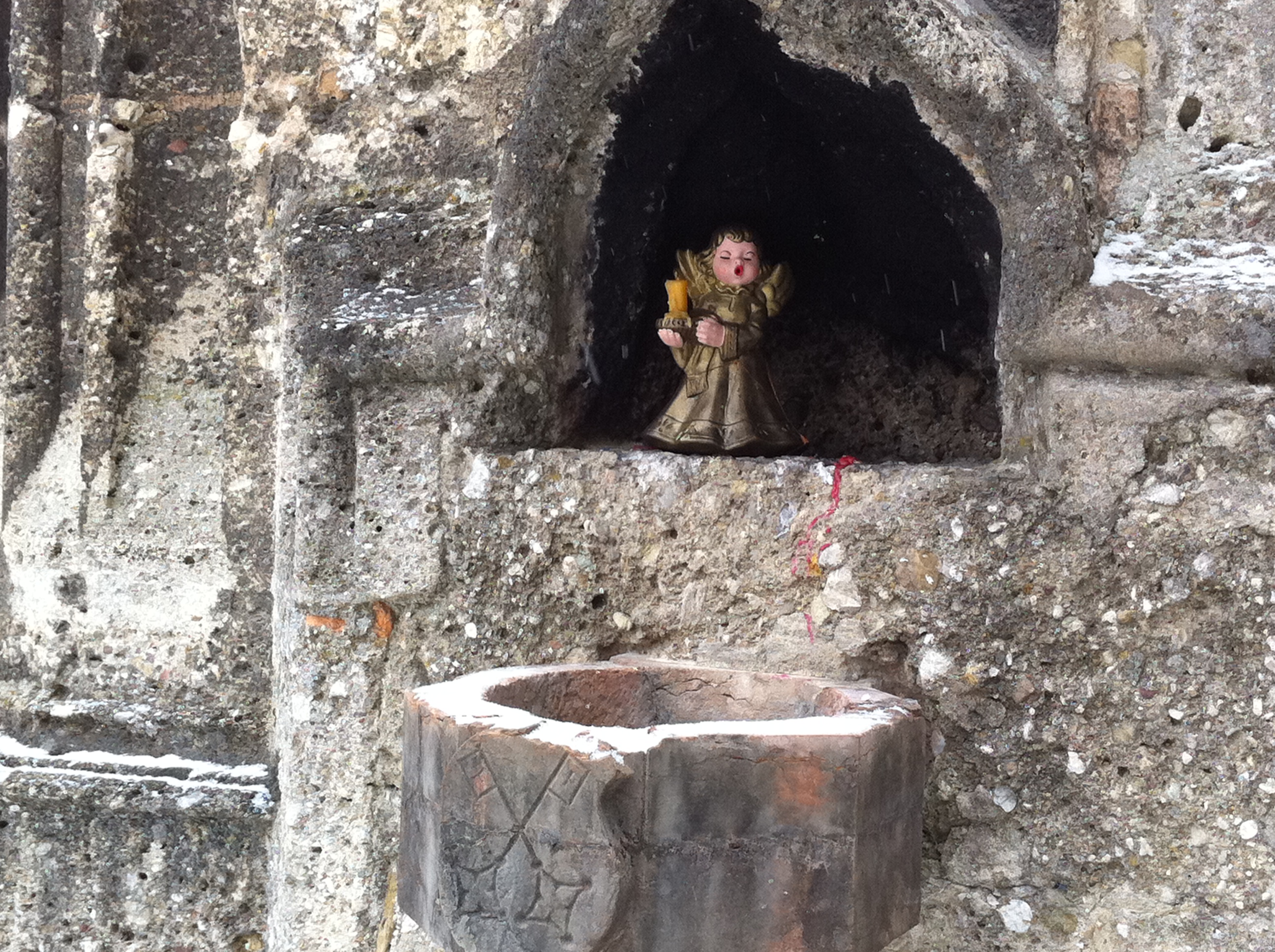
Angel and muse

April 22, 2011

You wonder about all the time you spend online sometimes, where it’s heading, where it’s taking you. Where all the twitter followers might take you, how you can ever read all the valued work of the people you follow; for me: the writers, readers, bloggers, family historians, cancer researchers, vintage lovers, photographers, artists, entrepreneurs, creatives and other ‘out theres’ paving a blazing way.

You wonder how you might ever keep up with all the blogs you love and subscribe to, clumsily it seems, through a series of readers that overwhelm you. You wonder how you will capture the essence of each crafted voice and message you admire or learn from and how you will apply them to your own journey.

And then you lie here in the middle of the night in hospital after an operation, full of painkillers and strange emotions, and receive the most blessed message from a fellow traveller, more a leader and teacher, met through your various journeys in your online world.

In this case, it’s from Susannah Conway, angel and muse to me and many, as we are in the middle of engaging in our Unravelling 2 e-course journey. In the midst of pain, the message about ‘Stories’ and what we will be thinking through and working on this week hits a poignant space, the tears start but it also makes my heart soar and immediately celebrate possibilities. And I start writing again, if here, full of painkillers in the middle of the night.

That’s why I twitter, blog,  flickr, read blogs, subscribe to Susannah Conway, Colleen Wainwright, Chris Guillebeau, Danielle LaPorte, Sage Cohen, Shanna Germain, Jonathan Fields and Joanna Penn. Why I love the creative inventions and reinventions I find on etsy and in delish and love reading about people dealing with fear and challenges in fearless.  Why I engage with these very special people and their products, read their work and their reviews, listen to their podcasts, follow their entrepreneurship, their stories, their journeys, buy their books, join their online classes and apply the thoughts, processes and aspirations to myself as I journey on.

It all leads to engaging with like others and knowing what real stories I can tell, what my role as angel and muse in an online space might be, finding the unique transcendent voice that might articulate the story or experience that others might learn from, add to or grow from, imperfect and flawed as it is, a reaching to a sacred creative place.

Postscript:

No dramas with the op – I am fine and recovering and it’s nothing major!

If you do have a recommendation for an RSS reader that doesn’t overwhelm or any other strategies for dealing with all the blogs you come across and want to keep up with, I would heartily appreciate any tips!

Share

creativity poetry writing

Gems #14 Writing Poetry

March 26, 2011

 Some gems on writing poetry whether you are just getting started or an old hand needing inspiration and direction…

Writing the Life Poetic: An invitation to read and write poetry – Sage Cohen

Poetry is often seen as a rarefied art on the fringes of life; even when you are a poet yourself, you can feel like this. Sage Cohen’s Writing the Life Poetic takes poetry from any pedestal it might have ended up on, and brings it firmly back into the central context of your life. The book is beautifully written and gorgeous to hold, with quirky graphics through-out. It feels like you are being taken by the hand and gently led back to the heart of poetry and its rightful place for you. As Sage points out in the introduction:

Poetry gives us an opportunity to experience our lives twice. First, as it happens, in real time. And second, in heart time. The poem gives us a kind of cosmic canvas to savour a moment, make sense of it, put a little frame around it, and digest our experience more completely.

Especially for people who love poetry and might have lost it somewhere along the way, Writing the Life Poetic helps you discover or rediscover the power of poetry, its place in everyday life and how to engage practically with this creative space. The book is full of advice such as starting where you are, showing versus telling, working with the senses, using imagery, reading poetry, understanding how stanzas work, revision, writing rituals, creating a system for poetry practice and so much more. Each chapter is short and focused with  exercises to practically apply the skills and concepts discussed.  It’s like a sensitive guidebook to take you through a deep engagement with poetry from wherever you are starting or recommencing your journey.

Writing Personal Poetry: Creating poems from your life experiences – Sheila Bender

I found this brilliant book in my local library and then had to have it so I could read it more fully and over time. The introduction ‘Poetry is always a good idea’ had me saying, ‘Yes, yes!’ as I read through. Sheila quotes poet Louise Gluck saying that:

writing a poem begins with a haunting, as if the finished poem already exists somewhere. In this way…the poem is like a lighthouse, “except that, as one swims toward it, it backs away.”

Coming from a similar space as Sage Cohen, Sheila Bender situates poetry in the context of daily life, commenting that poets also ‘cook, clean and take out the garbage..’ and then identifies how finding that writing about the ‘lighthouse-that-already-is’ can be part of this daily life.

Sheila’s focus is personal poetry, why we write it, how to empower yourself to write, acknowledging your poetic intelligence, getting the confidence to start, the value of reading poetry, tools for writing poetry and the poet’s stance. There are some excellent poems in progress included in this book from Sheila’s students’ work. They show how a poem progresses from an idea to a draft to a revision to a fully realised piece of work. I loved these students’ poems and what they showed about the progress and realisation of their art. There is much to be learnt from this book: especially heart for the journey and specific processes and techniques for writing personal poetry.

Creating Poetry – John Drury

Creating Poetry  is a little more technical in approach and this a useful complement to the above two books. It’s an accessible introduction to poetic terms like metaphor, assonance, simile, alliteration, rhyme and enjambement. These terms are explained with clear examples. The book also provides an excellent summary of poetic forms and rhyming patterns: ghazal, haiku, pantoum, sestina, villanelle and sonnet, for example, again clearly set out and explained.

The book takes you through the stages of preparation, language, the senses, shaping, patterns and traditions, voice, sources of inspiration and the revising and finishing processes. Full of practical exercises that help you engage as you read, the book is an accessible reference for the more technical side of writing poetry.

All three of these books have a central place on my poetry writing bookshelf and are heavily underlined. They are guidebooks I visit regularly to help me orient my poetic journey, to keep me moving positively ahead and to ensure I have courage and skills for the writing process.

What are your recommended guidebooks for writing poetry?

Image by alexschwab  from flickr and used under a Creative Commons license with thanks: One poem of thousands located on the longest poetry wall in the world in Changde, Hunan Province, China.

Share

blogging creativity planning & productivity writing

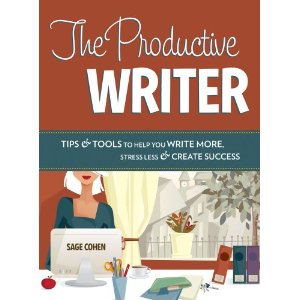
The Productive Writer: Review

March 13, 2011

Two of my favourite topics are ‘Writing’ and ‘Productivity’ and the planning linked to bringing successful outcomes about. So Sage Cohen’s latest book, ‘The Productive Writer’ is perfectly attuned to my interests and priorities and I’m sure relevant to other writers interested in making the most of their time and creative efforts.

It’s eminently practical and full of tips for anyone interested in being more organised and able to produce outcomes, especially words framed in a meaningful way to make an impact. It’s relevant to all kinds of writing: poetry, fiction, business writing, non-fiction, blogs and freelance approaches. Ultimately it’s about the place of that writing in the context of your life and how to make all this work.

Sage’s key platform is that productivity is a ‘lifestyle choice’ as she outlines in the introduction:

Productivity, then, is your own, personal GPS as you navigate the endless windernesses of your mind, craft, or subject matter and bring the best of what you have to offer to the page – and the world. Productivity is a means of witnessing and steering yourself toward your greatest good and training yourself to weed out the interference along the way.

‘The Productive Writer’ then navigates its own GPS through these wide waters to cut a swathe of practical advice to assist writers to be as productive as they can in every facet of their work. The weave of the book traverses critical themes you can hang onto as signposts for your own journey. These include:

  • building a case for your future as a writer
  • studying your heroes and how they work
  • establishing a platform or organising principle for your work
  • thinking productively & capturing ideas
  • goal-setting and organisational tips
  • managing time and procrastination tendencies
  • revising tips
  • publishing and promoting
  • sustaining relationships around your work
  • celebrating your success

I especially loved Chapter 12, ‘Writing in the Margins of a Full-time Life’ that reminded me that I am not the only one working full-time and trying to write; that it’s not just about balancing work and writing – it’s about balancing life and writing; and the value of my day job to my writing life and the need to remember to acknowledge the skills I learn there. As Sage comments in the context of her own diverse mix of writing commitments:

Each skill I acquire in service to someone else’s goals becomes a part of my own toolbox.’ (p115)

Sage, as her name suggests, is a very wise writer. This book, linked in with her new platform ‘The Path of Possibility’, brings writing and productivity together in a way that amplifies both and clearly sets them in the context of a broader creative life. Like Sage’s previous book, the wonderful ‘Writing the Life Poetic’, ‘The Productive Writer’ has the effect of taking you by the hand and encouraging you, gently and practically, every step of the way from vision to fruition. Committing to writing is not an easy task and we all need all the support and advice we can get to overcome resistance, barriers and excuses. Sage’s book demonstrates that:

…when we see that there are endless ways to establish and sustain a productive writing life – at any age, in any work-family circumstance – we may have an easier time trusting that we will find our own way forward.’

As you can see from the recent gaps here, for a number of reasons, I am having my own struggles with balancing writing in my life. Thankfully, in the meantime, I have also been reading ‘The Productive Writer’. Whilst struggling with the immediate application at present, the ideas contained there will become a critical part of reorienting my own GPS in moving forward to achieve my writing goals.

Share

creativity planning & productivity writing

Planning for the Future Starts with Celebrating the Past

January 16, 2011

A guest post from author Sage Cohen

  A note from Terri:

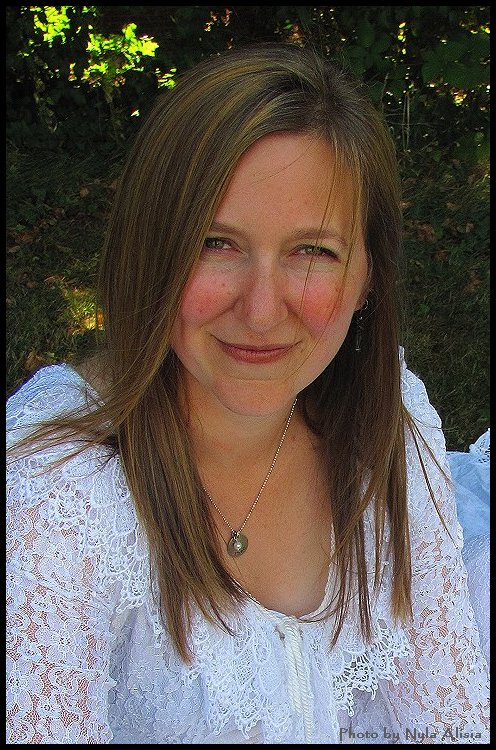
I am thrilled to have Sage Cohen, pictured left, writing here for my first guest post. Sage’s background and the details of her latest work, including her new book, ‘The Productive Writer‘ are below.  I am indebted to Sage and her work as a gifted writer and teacher who has enriched my writing life.

In this post, Sage encourages us to review our broader writing successes in 2010 in preparation for a productive 2011! 


Happy New Year, writers! I believe that there is no better launching pad into the great, blank page of 2011 than a thorough inventory of all that went right in 2010. With this in mind, I’m going to ask a series of questions to guide you in recounting your many successes this past year! I encourage you to take your time and be as thorough as you can in listing every single thing you appreciate about yourself and what you’ve accomplished in each dimension of your writing life–even if the best you can do is admire that you stopped burning your rejection letters. Deal?

  • What was most fun, exhilarating or rewarding in your writing life this year?
  • What obstacles did you face and overcome?
  • What relationships did you build, repair or retire, and how has this contributed to your writing life?
  • What did you let go of (habits, relationships, attitudes, clutter) that was no longer serving you?
  • What did you read that taught you something about your craft, your platform or how to take your writing and publishing forward?
  • What did you earn or what opportunity did you land that felt prosperous?
  • How has your confidence and/or craft improved?
  • What have you learned about social media that is serving your writing life?
  • What strategies worked best for being effective with your time?
  • How did you nurture and sustain your well being–in mind, body, spirit?
  • Who has praised your writing or teaching or facilitating? What did they say and how did it give you a new sense of appreciation for yourself and your work?
  • What did you learn about your writing rhythms: time of day to write, managing procrastination, how and when to revise, making use of slim margins of time, etc.?
  • Who did you help, and who helped you?
  • What did you learn about yourself from rejection, and how has it helped your writing, your confidence or your submissions approach develop?
  • What did you do that terrified you–but you did it any way? And how did that benefit your life and your writing?
  • How were you patient?
  • When and how were you successful at juggling the competing demands of family, writing, work, and everything else in your full life?
  • Who did you forgive? Who forgave you?

Because it’s so easy to keep our minds trained to the loop of an unsolvable problem or two, you may be surprised at how many triumphs are revealed as you answer these questions. Every risk you took, skill you fortified and skin you shed in the service of your writing life is a foothold in the future you are aspiring to create. Nice work!

 About Sage Cohen

Sage Cohen is the author of The Productive Writer (just released from Writer’s Digest Books);Writing the Life Poetic and the poetry collection Like the Heart, the World. She blogs about all that is possible in the writing life at pathofpossibility.com, where you can: Download a FREE “Productivity Power Tools” workbook companion to The Productive Writer. Get the FREE, 10-week email series, “10 Ways to Boost Writing Productivity” when you sign up to receive email updates. Sign up for the FREE, Writing the Life Poetic e-zine. Plus, check out the events page for the latest free teleclasses, scholarships and more.

Share

creativity planning & productivity transcending writing

Gems #12 Planning and Productivity

January 6, 2011


Happy New Year!

It’s great to be reading all my favourite blogging writers reflecting on 2010 and plans for 2011. It’s an exciting time for planning to be productive in whatever priority areas are critical for you. I thought I’d share some gems on planning and productivity that might be of interest for setting your agenda for 2011. They will certainly be part of my own personal planning.

Chris Guillebeau is something of a guru of personal planning. With a successful track record of setting and reviewing yearly goals, Chris shares his processes and goals with his readers generously. Chris has recently been working on his annual review of 2010 to inform planning for 2011. It starts with two simple questions:

What went well in 2010?

What did not go well in 2010?

From there, Chris reflects on 2010 and builds his plan for 2011, including setting the metrics for checking the achievement of his goals. I love his process and have found it personally rewarding over the last two years. Here are a couple of links to Chris’s recent writing on his annual review process:

2010 Annual Review – The Beginning

2010 Annual Review – Looking Forward

All of Chris’s recent posts on his annual review process are excellent and I will be revisiting them in full soon when I sit down to do my own reflection and planning process for 2011.

Charlie Gilkey has some excellent planning tools also at Productive Flourishing on his Free Planners page. There are all kinds of planning tools: ones for planning blog posts and daily, weekly and monthly action planners. There are also tools for identifying your most productive times. I will be looking to apply these in 2011. Highly recommended and again, shared generously which is appreciated.

In the writing field, Sage Cohen’s new book The Productive Writer provides strategies and systems for writers looking to maximise their time with all types of writing. Sage’s background crosses a broad range of writing areas including being a writer of strategic marketing content as well as a successful published poet. She is also a skilled and sensitive teacher; I have been an avid and appreciative student of her ‘Poetry for the People’ online courses. She is the author of one of my favourite books on writing, ‘Writing the Life Poetic: an Invitation to Read and Write Poetry’.  

I’ll write a fuller review of ‘The Productive Writer’ soon and Sage will also visit here soon for a guest post, so stay tuned. Sage’s writing is always clear, heartfelt and grounded in practicality and this book will be of great value to writers in getting organised and maximising their creative time. Sage’s new Path of Possibility site offers advice and resources for productivity in writing and in life.

What tips do you have for planning and productivity for 2011?

Share

blogging family history writing

Transitioning

December 11, 2010

There has been something of a hiatus here. Not for lack of things happening. I have been incredibly busy and it’s a time of change. Something about the end of one year and the beginning of another always means being busy but this year has been an extra busy time with much transitioning.

I have been finalising a challenging work role that has been the focus of my energy for much of this year. I was heartened to read Danielle LaPorte’s recent post on entrepreneurial spirit inside and outside the 9 to 5. Whilst my job recently was much more than 9 to 5, it was very much carried out in the spirit of entrepreneurship, of change and of creativity in solving problems with heart and courage.

I read this year about being a linchpin and a career renegade; more about the art of non-conformity and about being a fire-starter whilst in this work role over the past nine months. This spirit very much pervaded the way I tackled some long-standing issues. The feedback was positive and I appreciate how much my reading and engagement with social entrepreneurship has guided my leadership work this year. In fact, I don’t know what I would have done without it at times. It was fascinating how many times I became stuck or was trying to solve a crucial problem when a critical post from Chris Guillebeau, Colleen Wainwright, Danielle LaPorte or Jonathan Field, amongst others, came through to light the way.

I have also been travelling and busy getting organised to leave a warm Sydney to visit a very cold UK and Europe. I have enjoyed again the feeling of transitioning across countries, being in the air suspended between and the arriving. I have been visiting East Sussex and the place where some of my ancestors lived for hundreds of years before part of the family broke itself off and moved to Australia for warmer climes and a new life of opportunity in the 1830s.

I am especially interested in one ancestor: my great, great, great grandmother, Jane Honeysett, and her journey. In the end, it was not a happy one but I am inspired by her transition, her hope, what she left behind, where she went and why and what it was like living in Sydney as an early woman settler. The female migration experience is not much written about it seems. I am keen to find her voice and that’s why I have been visiting East Sussex and listening to the voices and the accents; feeling the icy weather; walking around the church where she was married in 1825; driving through lanes with their high hedges, the worn and ancient stone homes with moss on the roof; and visiting the castles, inns and abbeys that were the centrepieces of life in East Sussex then and now.

I am also beginning to write that story now. That is my goal: to write a novel that is the story of Jane’s life and the female migration experience. Visiting the land of my ancestors seems to have enabled me to start to write finally, breaking through that invisible line of resistance. I am grateful for The Writers Cafe software by Dr Julian and Harriet Smart, which I found through Joanna Penn and her podcast conversation with Harriet. The software really is very good. After all my procrastinations about starting to write, it really was as simple as blocking out some scenes already lined up in my head and filling them out.

This transition to actually starting to write seemed to need to occur in the location. I’m not sure why but I had a keen sense in arriving of returning to the place where Jane could not return after she left. Maybe she is my guardian angel, some ancestral support, helping me. I know she could not read or write so maybe I am her voice, her writing, her words and her song and being in her birthplace and her home was a catalyst for beginning.

I have also been Unravelling this past few months, working through the online experience Susannah Conway creates that is very deep and unlocks so much.  Through creating a supportive environment focused on images and words and enabling an online network of participants, Susannah successfully creates connection between people and within souls that is magical. It’s hard to describe and the unravelling is still occurring, but I suspect this experience has also been the backbone of much of this transitioning. I’m comfortable in my own skin and its various guises of leader, researcher, writer, reader and blogger and enjoying the connections and cross-fertilisations this year has brought, most recently culminating in so much arrival.

What transitioning is happening for you at the end of this year?

 Share

PRIVACY POLICY

Privacy Policy

COOKIE POLICY

Cookie Policy