Category

creativity

creativity transcending work life

Thinking about transcending

August 29, 2010


Back to base. Thinking about ‘transcending’, the word, what it means, what it means to me.

Checking out the Merriam Webster online  on ‘Transcending’ yields up:

‘transcend

transitive verb:

1 a: to rise above or go beyond the limits of  b: to triumph over the negative or restrictive aspects of: OVERCOME
2: to outstrip or outdo in some attribute, quality or power
intransitive verb: to rise above or extend notably beyond ordinary limits

Examples of transcend:

1 music that transcends cultural boundaries
2 She was able to transcend her own suffering and help others
3 Her concerns transcended local issues

Origin of transcend:

Middle English: from Latin, transcendere – to climb across; transcend, from trans, and scandere, to climb
First known use: 14th Century
 
Related to transcend:
Synonyms: beat, better, eclipse, exceed, excel, outclass, outdistance, outgun, outmatch, outshine, outstrip, overtop, top, tower (over), surpass’

The words that resonate with me: to rise above, go beyond the limits of, triumph over the negative or restrictive aspects of, extend beyond ordinary limits, to climb across, eclipse, exceed, surpass and outgun. They suggest a strength of spirit, resilience, creativity and ability to find a source of power to go that extra dimension.

This for me relates to managing grief, pain and difficulty; finding solutions in the workplace; taking a creative approach instead of an old one; finding a fresh perspective;  being able to find ways of managing and climbing across obstruction or restriction; ways such as:

  • writing: poetry especially, but any writing that helps you understand and cut through – letters, emails, journals, blog posts, essays, long cathartic dumps of free-writing, submissions that clarify and come up with a strategy and creative solution to a problem
  • reading the right book: whatever it is – fiction to escape, non-fiction to understand, learn how to or make sense of; either form to learn about life, yourself, writing and another’s world
  •  listening to the perfect music for the moment, again whatever it is and thank goodness for ipods and other portable music sources that enable us to find the right song for the moment and play it now.
  • images and photography: creating an image that captures where you are, seeing an image that another has captured that echoes the world for you just now, wishing you had a camera for that image you have to capture in your mind’s eye to carry with you as the cameo of your current state of being
  • family and family history: past, present and future, those you have loved and lost and cherish, those you can see and hold and hang onto and connect with, those you have never met that mean so much to you somehow through your lineage because they are part of you
  • friends: people you chime with that become part of you through some serendipity or synchronicity of meeting – in the workplace, online, through your family, through your various interests in the world.
  • blogging to find a way through and beyond, to communicate and share this vision, to appreciate the unique visions of others and how this might inform and shape your own.

Hence my themes, categories and tags here in this special space.

The words that don’t resonate with me are the ones mostly about out-doing somebody else. ‘Transcending’  for me is not a comparison or a competition; it’s a personal journey of finding the extraordinary, the extra-special, the extra-creative way of managing and living positively and the difference this can make.

It’s become an intuitive personal mantra, my theme and centre, honed from experience but always developing into the future. I welcome you to join in the journey of exploring more about transcending, how the ‘ climbing across’ might be negotiated and the difference it could make. I welcome your thoughts here. 

‘The brighter the light, the darker the shadow.
Some things can’t be changed; they’re part of the show.’
Stephen Cummings – ‘The Brighter the Light’
Good Bones (Liberation Blues Acoustic Series)
Share


creativity introversion

Gems #7 On Creativity and Solitude

August 21, 2010

Some gems on creativity and solitude…

Leo Babauta opens a great piece on creativity and solitude with this quote: “In order to be open to creativity, one must have the capacity for constructive use of solitude. One must overcome the fear of being alone.” ~Rollo May

Like Leo, I am endlessly fascinated with creativity. When I worked assiduously through the wondrous ‘Style Statement‘ book by Carrie McCarthy and Danielle LaPorte, I ended up with ‘Sacred Creative’ as the two key words for where my essence meets my expression. I love reading biographies of writers, looking at their workspaces and engaging with how they created their work.

Leo’s article, The No 1 Habit of Highly Creative People, comes up with solitude as the No 1 habit for creativity and reflects on the ways solitude fuels and supports creativity. He includes some thoughts around solitude as a source of strength from current creative people as well as some famous creative people from the past . His article, linked to this one, The Little But Useful Guide to Creativity, is a further reminder of ways of being grounded in a creative mindset. The ones that ring true for me: long walks on the beach, shutting out the outside world, getting things down and working in small steps.

I love May Sarton’s ‘Journal of a Solitude’  for capturing what it’s like sometimes when solitude and creativity come together and the raw, vulnerable feelings that come up when you do manage to get that space and time:

‘The ambience here is order and beauty. This is what frightens me when I am first alone again. I feel inadequate. I have made an open place, a place for meditation. What if I cannot find myself inside it?

I think of these pages as a way of doing that. For a long time now, every meeting with another human being has been a collision. I feel too much, sense too much, am exhausted by the reverberations after even the simplest conversation. But the deep collision is and has been with my unregenerate, tormenting and tormented self. I have written every poem, every novel for the same purpose – to find out what I think, to know where I stand. I am unable to become what I see. I feel like an inadequate machine, a machine that breaks down at crucial moments, grinds to a dreadful halt, “won’t go,” or, even worse, explodes in some innocent person’s face.” (p12)

And I love these words from the end of the No 1 Habits piece for helping to still that maelstrom of vulnerability:

‘Lastly, being creative means living a creative life.  Expect yourself to have one.  Believe you are creative. Know that you are. Make that the most important habit of all.’

A recent Creative Penn podcast interview ‘Authenticity And Creative Expression With Robert Rabbin’ provides some excellent tips for moving through these barriers and into the authentic and creative directions of your plans and dreams. The interview provides practical advice on how to conquer your fear of being authentic. Being playful and having fun are part of the solution. There is some really great advice to think about for moving on with creative adventures like a writing life.

Image, Gold enamelled gem-set pendantby kotomigd from flickr and used under a Creative Commons license with thanks

Share


blogging creativity transcending writing

Gems #6 Encouragement, kindness and resilience

August 9, 2010

Some recent gems shining a whole lot of light…

If you haven’t read The Manifesto of Encouragement on Danielle LaPorte’s White Hot Truth, rush over for the best injection of inspiration and encouragement you will have felt for a long time. Danielle’s initial post is pure light and genius. Then hundreds of people have added their words from their precious angle. It’s a string of pearls you can wear around your heart to protect you and make you shine. It also opens you up to what you might be missing around you or what you might aspire to. I hope one day it becomes a book I can carry with me every day.

Recently, I wrote a post about twitter and my positive experiences connecting up with like-minded people and the kindness and reciprocity I had found. I had just finished writing and posting, to then find Jean Sarauer’s post on Virgin Blogger Notes on a related theme: How to grow your blog with kindness. Jean provides a personal story and some excellent examples of how kindess and adding value in blogging and twitter can enhance the experience and outcome for all. Jean encourages us to ‘practice shifting your focus from what you want to get to what you can give’.  This post helps you appreciate how you can contribute and how ‘As the analytics of your heart show upticks in kindness, encouragement, and support, the analytics of your blog will also improve.’  The ‘Manifesto of Encouragement’ is a great example of this.

I only caught up this week with the July 11 ‘Creative Penn’ podcast interview by Joanna Penn: ‘Inspiration For Authors On Resilience, Accepting Criticism And Being An Introvert With Clare Edwards’.  It was excellent – one of the best of Joanna’s interviews I’ve listened to – probably because it chimed in around some personal keywords: resilience, introversion and writing. I loved the way Joanna opened up in this interview about her own experiences as an introvert with doing interviews and developing a speaking career. I related so much, being at the far end of the introversion spectrum and interacting with people all day, every day, in my work role, often standing up and speaking to many people. I have learnt to manage this but this interview provided more insightful tools for balancing between the inner and outer worlds. There is also a strong focus also in the interview on tips for resilience and staying present in the moment.

Three overwhelmingly positive gems to take us all forward with encouragement, kindness and resilience!

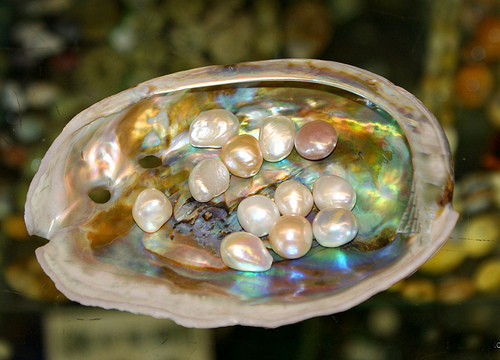
Image, Mother of Pearl by Westcoastrobin from flickr and used under a Creative Commons license with thanks

Share

blogging creativity writing

Shorter posts, smaller steps

August 7, 2010

My posts are too long I know. I don’t start out to write long pieces. I know what I want to say and it’s structured in my head but often ends up longer than I intend – more around 1000 words than a neat 300.

As John Sherry points in a guest post on Virgin Blogger Notes, ‘Why Bite Size is the right size content’, it’s a lot to ask of readers if we are posting 2-3 posts a week of 1,000 words. It’s also making the task bigger than it needs to be for the writer/blogger. As I have progressed here, the posts have got longer, the gap between them larger and the job of writing them has become more demanding and less likely to occur regularly.

The result is a spiky reader profile with highs and lows, naturally, as they have nothing to read between the big waves of words I carefully construct.

I’ve also been re-reading ‘Bird by Bird’ by Anne Lamott and she implores in many ways to take writing in steps. She emphasises the ‘short assignment’, chunking the work into paragraphs, the ‘one inch picture frame’, an immediate focus. She provides a wonderful quote from E.L. Doctorow: ‘writing a novel is like driving a car at night. You can see only as far as your headlights but you can make the whole trip that way.’

The big lessons of life – trauma, grief, hospitals, illness – teach us, force us, to take one hour, one day at a time, to be in the moment, to work step by step, to have a vision and know where you want to go, like the car with its headlights leading the way, but to focus on now so as not to be overwhelmed.

So, taking this good advice from John Sherry, from Anne Lamott, from my experiences in life, I am going to write shorter posts, keep this work moving, manageable and meaningful to others, and connect up the small steps into a journey I can measure. (Note word count = 336)

Image, Old stone steps through thick green vegetation by Horia Varlan from flickr and used under a Creative Commons license with thanks

Share

creativity writing

Gems #5 Facts, inspiration and story

July 26, 2010

Some recent writing gems on fact in fiction, inspiration and writing a story:

I loved the post, Making True Fiction, from Shanna Germain. It contemplates how true the facts need to be in fiction and how far you need to go with your research and accuracy in writing. It contemplates the conundrum of:  ‘In order to make stuff up, you have to convince your readers that it’s real. Both emotionally real and world-wise real.’

I am interested in this as the novel I am planning is in the historical fiction genre. I can see myself researching forever in the name of factual accuracy when the emotional authenticity of the story is the real issue. But how to get the balance? Starting out with the image of drowning vs the reality, Shanna explores what’s true, what’s fact, what’s accuracy and how much we need of these for an authentic reading experience. It’s an excellent thought piece I continue to think about on many levels. Some great readers’ comments also.

The guest post by Benison O’Reilly,’ Writers, Inspiration and the Ideas We Collect,’ on Suzannah Freeman’s ‘Write it Sideways’  was always going to grab me, based as it is on my favourite bird: the beautiful, sleek, dark blue, satin bower bird. The bowers of these fabulous birds are the result of the most amazing courting ritual of gathering blue items to attract a mate. If you ever see a nest, it’s littered with blue bottle tops, blue pegs and other (blue) detritus. All these riches to attract a mate  – check out the great pic in the article.

The point of the article is that writers need to be like bower birds, gathering, noting, recording, attuned to detail so we can use it for writing:

Undiscovered gems are scattered everywhere if you care to look. Keep your eyes and ears open and be disciplined, record everything.’

Read it – it’s brilliant just like the blue of the satin bower bird!

And finally, a custom made article just for me. From reading the author’s blog of C Patrick Schulze and a follow-up twitter conversation, he asked if there was anything specific I needed help with in my writing. I mentioned planning my novel as that is what I need to do next. I have done the research, have the idea but need to plan and get started. The result was a fantastic post with my needs in mind, ‘Don’t write a novel, write a story’. I expected structure, plot, planning details but this overall approach to how to manage the framework of the story was perfect for me just now. My main character’s journey doesn’t seem so heroic on the surface, but this is what I feel – a hero underneath to be resurrected, a victim of circumstances and difficult times that lost her way. I am honoured by the article and its helpfulness. Special thanks to C Patrick Schulze!

Image, Gems by Orbital Joe from flickr and used under a Creative Commons license.

Share

creativity music & images poetry transcending writing

The touch and reach of poetry

July 18, 2010

I write poetry – true confession. A rarefied art if ever there was one and you wonder why you do it, what calls you, why it defines you, this thing you are so passionate about but hardly ever talk about.

Colleen Wainwright (aka the communicatrix) in a recent post, ‘My narrow, narrow bands of interest and utility,’ discusses the search for a defining way to talk about such life passions and goals and the overwhelming drive to write that is for her a connecting thread:

To my creative intimates—the fellow strugglers in writing workshop, or elsewhere behind the scenes—I share the only thing I know for sure: that I want to write, and that I am doggedly pursuing it, placing structures where they need to be to support it, addressing what obstacles I can see that might be getting in the way of it.’

I relate very much to these words. Poetry and other writing, the urge to create, the sense of this being an underlying connective piece, the pursuing of ways to further its creation and finding the lifestyle that allows and fosters a writing life are all key themes for me. It  is not easy, especially when you have written for a long time and it has not gone very far it seems. Poetry especially can feel like a driven art with not many places to go. It’s easy for it all to go underground for a while in between other things like work and family, but it springs back up eventually. You cannot keep it down forever it seems.

This initiation into poetry started for me in an English class in my second last year of high school at the age of 16. A wonderfully inspired English teacher, Miss Furlong, chose the words of songs by Joni Mitchell, Bruce Springsteen and Harry Chapin to teach us about poetry. We listened to and studied the words of ‘People’s Parties’, ‘Twisted’ and ‘Trouble Child’ from the gorgeous album ‘Court and Spark’ and  ‘Jungleland’ and ‘Meeting Across the River’  from the explosive and gutsy ‘Born to Run’ album. We interpreted these words and we wrote our own poems.

I loved these musicians already, I was good at English, I had started scribbling words like poems already, and whether it was the combination of all this or just the right inspiration at the right time, the words came out – in response and in creation. I wrote a poem called ‘Touch the Earth’ based on an elegant book of the same name, subtitled ‘A Self-Portrait of Indian Existence’ with sepia images by Edward S Curtis and statements by North American Indians compiled by T C McLuhan. I wrote a poem of deep connection with these images and the people portrayed, forming and emerging onto paper in a surprisingly sensitive lyric piece capturing what I had been reading, seeing and feeling.

I got 30 out of 30 for my response to the poetry in song of Joni, Bruce and others and 25 out of 25 for my first full-blown poetic effort. I also received some feedback and a question: ‘I can’t fault this, Terri – your perception is startling – far beyond your years’  and ‘From where did you get your inspiration?’ I don’t know where it came from apart from the book and the connection with the words of songs I loved. I don’t know how I was able to articulate responses about relationships or other people’s experiences I had not directly experienced in any way at all.  But I found, from this writing experience, a way of accessing an inner knowing. I found a way of using the strength and music of language to interpret and understand the world as I was experiencing it. It opened my eyes to another level of feeling and thought, a latent talent, a lens of creativity I could see the world through. It was there already but the connection needed to be made and I was touched by poetry.

Sometimes you wonder where it will all go as you write, as you journey through crafting better and stronger poems and as you try to find a place for poetry internally and in the external world, such as through publication. I am heartened by Ted Kooser’s closing words in ‘The Poetry Home Repair Manual’ (p157):

‘I wish you luck with your writing, friend, and I hope that you’ll write a few poems that someone will want to show to the world by publishing them. Remember that the greatest pleasures of writing are to be found in the process itself. Enjoy paying attention to the world, relish the quiet hours at your desk, delight in the headiness of writing well and the pleasure of having done something as well as you can.’

I love these words. There is much valuable advice about crafting and publishing poetry in this wise and gentle book but I am calmed by the reminder to enjoy the touch of poetry and the moments that it brings regardless of where it eventually goes. The words of Sylvia Plath also echo the pleasure to be found in poetry and remind of the miracles of poetry reaching the people that it does touch:

Surely the greatest use of poetry is its pleasure – not its influence as religious or political propaganda.  Certain poems and lines of poetry seem as solid and miraculous to me as church altars or the coronation of queens must seem to people who revere quite different images. I am not worried that poems reach relatively few people. As it is, they go surprisingly far – among strangers, around the world, even.  Farther than the words of a classroom teacher or the prescriptions of a doctor; if they are very lucky, farther than a lifetime.”

Quoted in Charles Newman (Editor) The Art of Sylvia Plath, 1971, Indiana Uni Press p 320 – from  ‘Context’, London Magazine, no 1 February, 1962, p45-46

What are your reflections on the touch and reach of poetry?

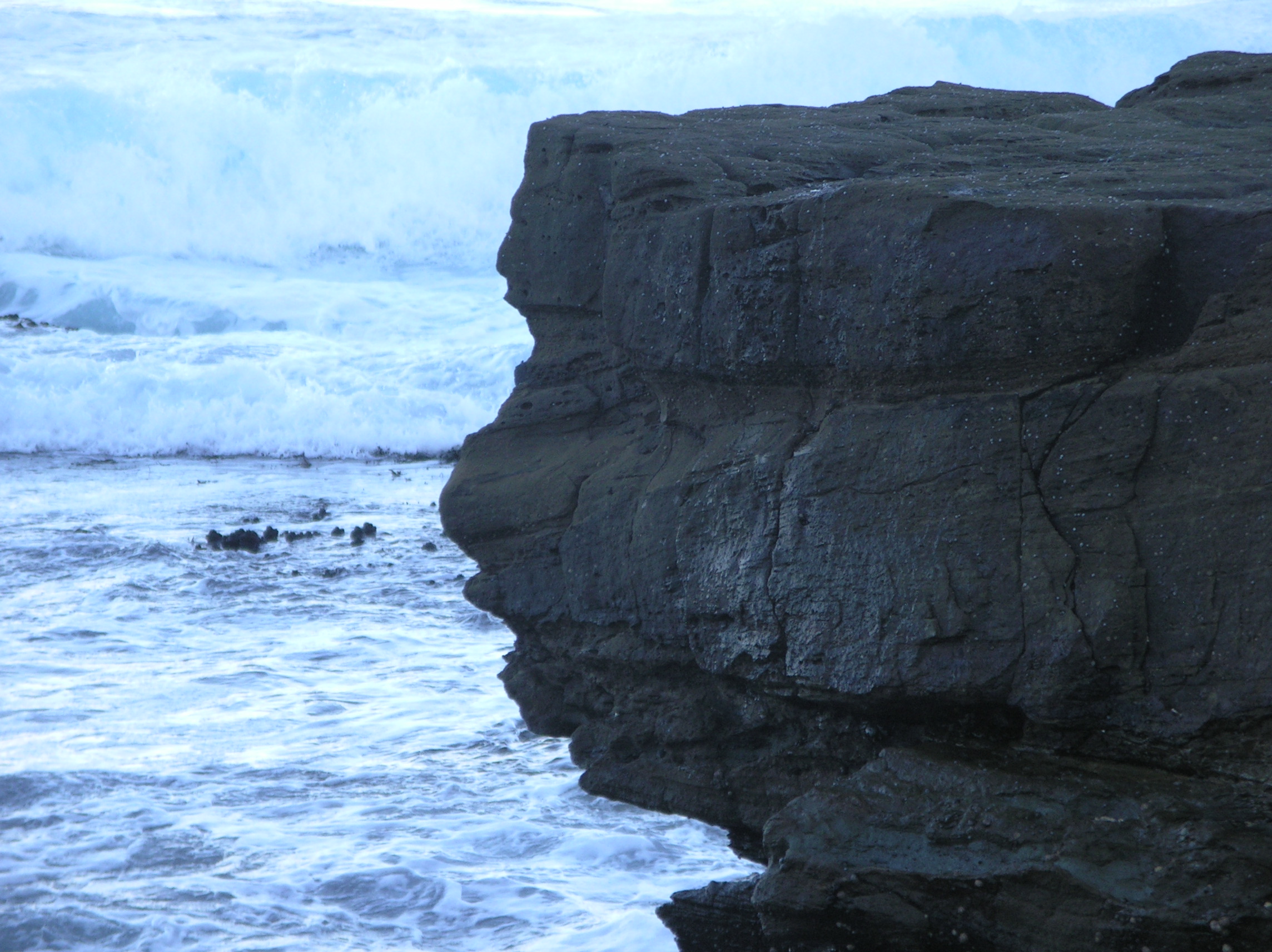
 Image, Dreams by jecate from flickr and used under a Creative Commons license. See Dreams link for poem accompanying the photo.

Share

PRIVACY POLICY

Privacy Policy

COOKIE POLICY

Cookie Policy